Skip to content
CPCole's Pro PaintingHouse painters, Tacoma and Pierce County Line open 24/7(253) 478-2745
Interior painting, Tacoma

Bathroom painting in Tacoma with paint that stands up to steam

Bathrooms are small, but they are the hardest rooms in the house on paint.

  • 24/7Phone answered
  • $615-$1,470Typical, per bathroom
  • 66Areas we paint
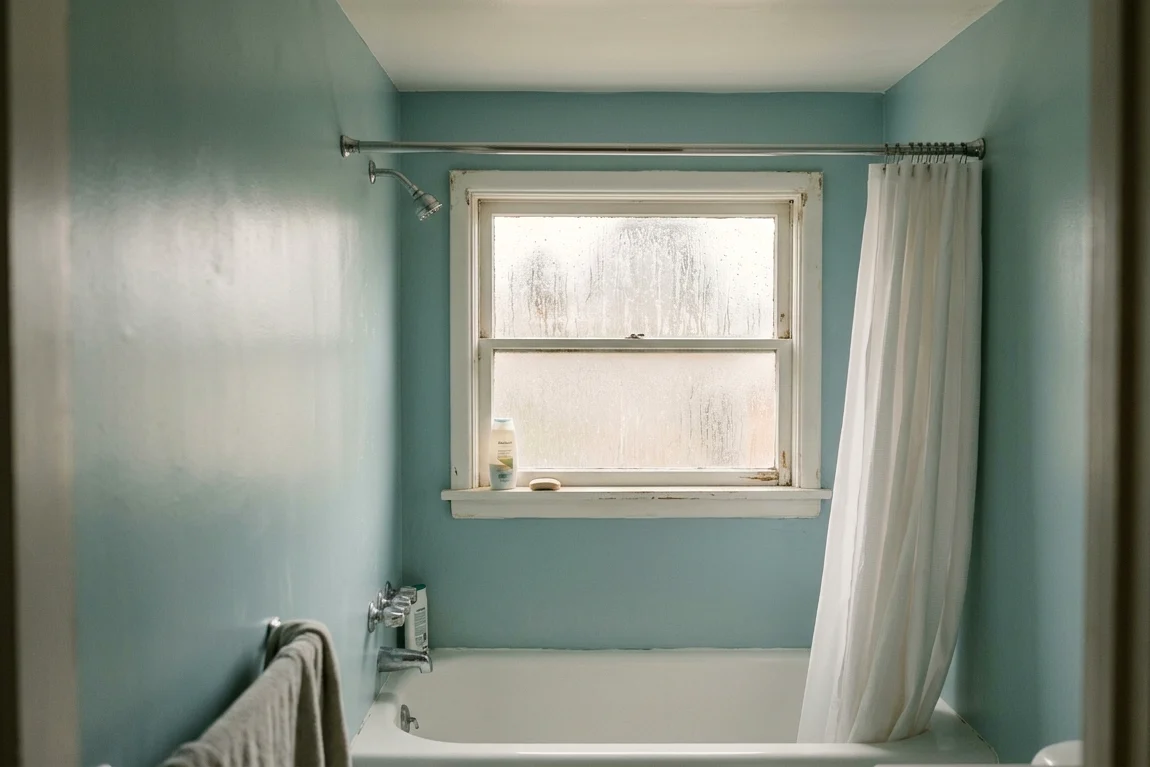
Small bathroom with freshly painted soft blue-green walls and a white ceiling above a white tub, rain-streaked frosted window in a Lakewood rambler
Quick answer

Bathroom painting means killing and washing off mildew, scraping peeling paint, patching soft or stained spots, priming, then rolling two coats of a moisture-rated finish with mildewcide on the walls and ceiling. The door, trim and vanity can be added. In Tacoma, a typical bathroom runs $615-$1,470 based on size and condition, a typical range with the real figure set after we see the room.

Bathrooms are small, but they are the hardest rooms in the house on paint. Hot showers fill them with vapor, the walls cool fast afterward and the moisture settles right back onto the ceiling. Through a Tacoma winter, with windows shut from October to May, that cycle runs every day. Ordinary wall paint softens, peels in sheets above the shower and grows black specks in the corners. A bathroom job is about building a paint system that handles all of that, from bare wall to final coat.

We treat the room as its own project rather than an add-on to a hallway. Mildew gets killed, not covered. Peeling layers come off back to a sound edge. Spots where water has reached the drywall get pressed and checked. Then a primer suited to damp rooms goes down, followed by a finish that resists moisture and mildew growth. We also run the exhaust fan and test its pull, since paint cannot rescue a room that never dries out. Call (253) 478-2745 and we'll come look at the room.
When to call

Signs it is time for bathroom painting

Paint peeling in sheets over the tub

Large flakes above the shower usually mean steam has broken the bond between coats, often because flat or eggshell wall paint was used.

Black or pink specks in the corners

Mildew and bacteria gather where the ceiling meets an outside wall, the coldest and dampest spot in the room.

Blisters that swell after showers

Bubbles that rise when the room fills with steam show moisture is getting behind the paint film.

Tan, sticky drips on the walls

Brownish streaks, called surfactant leaching, appear when fresh paint meets steam before it has cured. They wash off but often return.

Soft drywall near the tub or toilet

Drywall that gives under a thumb has taken on water and needs cutting out and replacing before it can be painted.

A fixture swap on the calendar

New fixtures next to old paint look unfinished. Painting before a new vanity goes in also saves cutting in around it.

Why does bathroom paint peel above the shower?

Most peeling we see in Tacoma bathrooms traces back to one of three causes. The first is the wrong product: flat or low-sheen wall paint soaks up vapor and loses its grip on the layer below. The second is painting over a glossy surface without scuffing it or using a bonding primer, so the new coat never truly gripped. The third is timing. Paint that takes shower steam a day after it goes on can stay soft for weeks and release in strips later.

Fixing it means finding the sound layer. We scrape until the edge stops lifting, then sand that edge so it disappears under the new coat. Where old paint has failed across a large area, we take it back to the drywall and prime with a product made to seal and grip. If the drywall paper has torn or bubbled, it gets sealed with an oil or shellac-based primer before patching, because water-based joint compound over torn paper blisters. Bigger damage goes to our drywall repair work before any paint.

Is mildew-resistant paint enough without a working bath fan?

Mildew-resistant paint helps, but it is only half the answer. The mildewcide in bath paint slows growth on the surface; it does nothing about water that hangs in the air for an hour after each shower. That is why we test the fan on every bathroom job. A quick check is holding a single square of tissue to the grille with the fan running. If it does not cling, the fan is weak, the duct is crushed or kinked, or the damper is stuck. We point out the problem and leave the repair choice with you.

Fan size matters as much as function. A small fan in a large bath with a soaking tub may run constantly and still leave the mirror fogged. Running the fan for twenty minutes after showers, leaving the door cracked and squeegeeing the shower walls all cut the moisture load in our wet season. Some older Tacoma bathrooms have no fan at all, just a window that stays shut from fall to spring. In those rooms the paint has to work harder, so we use the most mildew-resistant finish in the line.

What makes a bathroom paint system different from regular wall paint?

A bathroom paint system has three parts that work together. The primer seals patches and bare drywall and gives the finish something to grip, and in rooms with past mildew we choose one with its own mildew resistance. The finish coat is a moisture-rated acrylic with mildewcide, usually in satin, which sheds water and wipes clean without showing every roller mark the way semi-gloss on a full wall can. Trim, the door and a painted vanity base get a harder enamel, since wet hands touch them all day.

Cure time is the part people skip. Bath paint can feel dry in an hour but needs a few days before heavy steam, and longer in a cold house. If there is another bathroom, we ask you to shower there for the first day or two. If not, short, cooler showers with the fan on and the door open make a big difference. That pause prevents most early blistering and leaching. If other rooms need a refresh too, the same products carry into our interior painting work for laundry rooms and mudrooms.

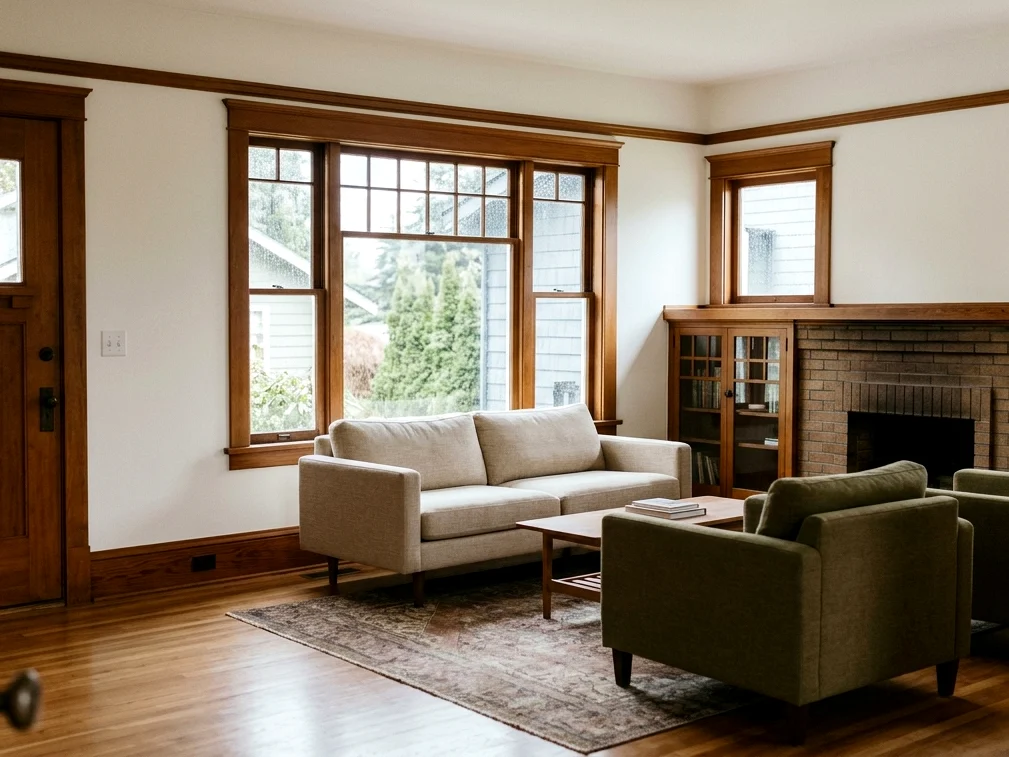
Freshly painted living room in a Tacoma Craftsman with warm white walls, stained fir trim and rain on the window
Prep sets the finish: most of a paint day goes into the work before color goes on.
What is included

What our bathroom painting covers

  • Mildew treatment and a full wash of walls, ceiling and trim
  • Scraping peeling paint and sanding the edges flush with the wall
  • Fresh caulk at trim joints and along painted edges near tile
  • Spot repair of small holes, anchor marks and stained drywall
  • Stain-blocking or moisture-resistant primer on patches and bare areas
  • Two coats of moisture-rated bath paint containing a mildewcide
  • Ceiling, door, trim and window casing painted in the same visit
  • A fan airflow check, with a plain note if it falls short
Job days

How a bathroom painting job runs

Typical order of work on a Tacoma-area project. Weather can shift exterior days.

  1. D1

    Look at the room and the fan

    We check the ceiling, the wall behind the toilet, the area above the tub and the condition of the trim. Then we run the fan and test its pull so the plan covers the cause, not just the stains.

  2. D2

    Clear and cover

    Towel bars, hanging mirrors and switch plates come off, and the tub, toilet, vanity top and floor get covered. Fixtures stay in place and are masked tight.

  3. D3

    Kill mildew and wash

    Mildew spots get a cleaner that kills the growth, followed by a full wash to cut soap film and hair spray residue. Every surface dries before repairs begin.

  4. D4

    Scrape, patch and prime

    Peeling paint comes off to a sound edge, holes and anchor marks get filled, and soft spots are cut out if needed. Patches and bare areas get a primer suited to damp rooms.

  5. D5

    Paint from the ceiling down

    The ceiling goes first, then the walls, then trim, the door and any vanity base in the scope. Each surface gets two coats of a moisture-rated finish.

  6. D6

    Reset and explain the cure

    Hardware and accessories go back on, coverings come off and the room is cleaned. We walk you through how long to wait before the first hot shower.

Cost

What moves the price of bathroom painting

Typical range $615-$1,470 per bathroom. These are the things that push a job toward either end.

  1. Room size, ceiling height and how much of the wall is broken up by tile.
  2. How far peeling has spread, and whether old paint must come off to the drywall.
  3. How deep the mildew stains go, since soaked-in marks need a sealing primer.
  4. Drywall repairs around the tub, toilet and old fixture holes.
  5. Whether the vanity, medicine cabinet or window trim is part of the job.
  6. Lead-safe prep where older bathroom trim or walls predate 1978.
Local

Bathroom Painting around Tacoma and Pierce County

Bathrooms in the 1960s and 1970s ramblers around Lakewood often have small fans that were vented into the attic, or no fan at all, and the ceilings show it with gray halos in every corner. Split-levels in University Place tend to tuck a bath against an exterior wall that stays cold all winter, so mildew lines up along that one wall. In older South Tacoma homes, a bathroom added decades ago may sit in a converted closet with painted plaster and no window. Each case needs a different mix of prep and product. We use the same moisture-rated system in laundry rooms and mudrooms, which take the same wet-season beating.

Where we do the most bathroom painting

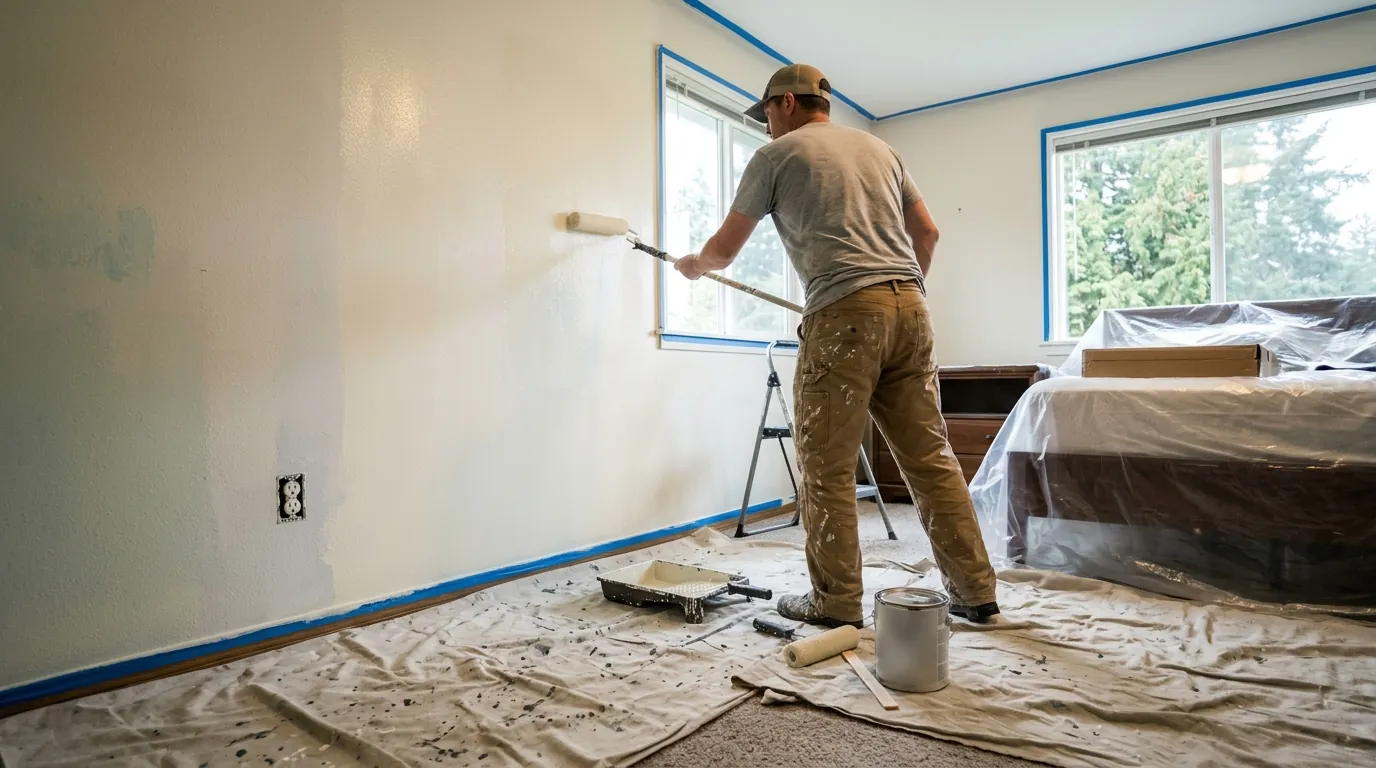
Painter rolling an eggshell finish onto a bedroom wall with drop cloths and taped trim in a Pierce County home
FAQ

Bathroom Painting questions from Tacoma homeowners

Where do the black spots on my bathroom ceiling come from?

Because the conditions that grow them are still there. Mildew needs moisture and a cool surface, and a bathroom ceiling under a cold attic or against an outside wall gives it both every time someone showers. Painting over spots without killing them lets them show through within weeks. We treat the growth, seal any stain with primer and apply a finish with mildewcide, but a fan that moves the steam out is what keeps it away.

How soon can I take a hot shower after the bathroom is painted?

Plan on waiting at least a day, and two or three if the house runs cool. Bath paint dries to the touch quickly, but the film needs time before steam hits it, or it can blister or leave tan drips on the walls. If you have only one bathroom, we finish early in the day, and a short, lukewarm shower with the fan running and the door open the next morning is usually fine.

Can you paint over the shiny old paint in my bathroom?

Yes, once the gloss is dealt with. Glossy oil or semi-gloss paint gives new coats very little to hold, which is a common reason bathroom paint peels. We clean off soap film, sand the gloss dull and apply a bonding primer before the finish coats. If the old paint is oil-based, we test it first. In bathrooms from before 1978 where sanding is needed, we use lead-safe methods to keep the dust contained.

Can the vanity be painted during the same bathroom job?

Often, yes. A wood or MDF vanity can be cleaned, sanded, primed and finished in a hard cabinet enamel while we work on the walls. Doors and drawer fronts come off and are painted in a separate spot so they dry flat. The vanity adds a day or two of drying time. For a full set of matching kitchen cabinets, our cabinet painting work covers that larger process.

Should the tile or tub surround be painted too?

Tile inside a shower or around a tub is a poor surface for paint, because daily water breaks the bond and the coating peels at the grout lines. Dry tile wainscot well away from the shower can take a bonding primer and a urethane enamel, though it wears faster than the tile itself. For tile that gets wet, regrouting and a deep clean usually give a better result than any coating.

Talk to us about bathroom painting

Call and tell us what you are painting. We answer 24/7 and set up a walk-through at a time that suits you.

Answered 24/7(253) 478-2745