Skip to content
CPCole's Pro PaintingHouse painters, Tacoma and Pierce County Line open 24/7(253) 478-2745
Exterior painting, Tacoma

Exterior trim painting in Tacoma for fascia, soffits and casings

Trim wears out years before siding does on most Tacoma houses.

  • 24/7Phone answered
  • $2,470-$5,830Typical, per home (trim only)
  • 66Areas we paint
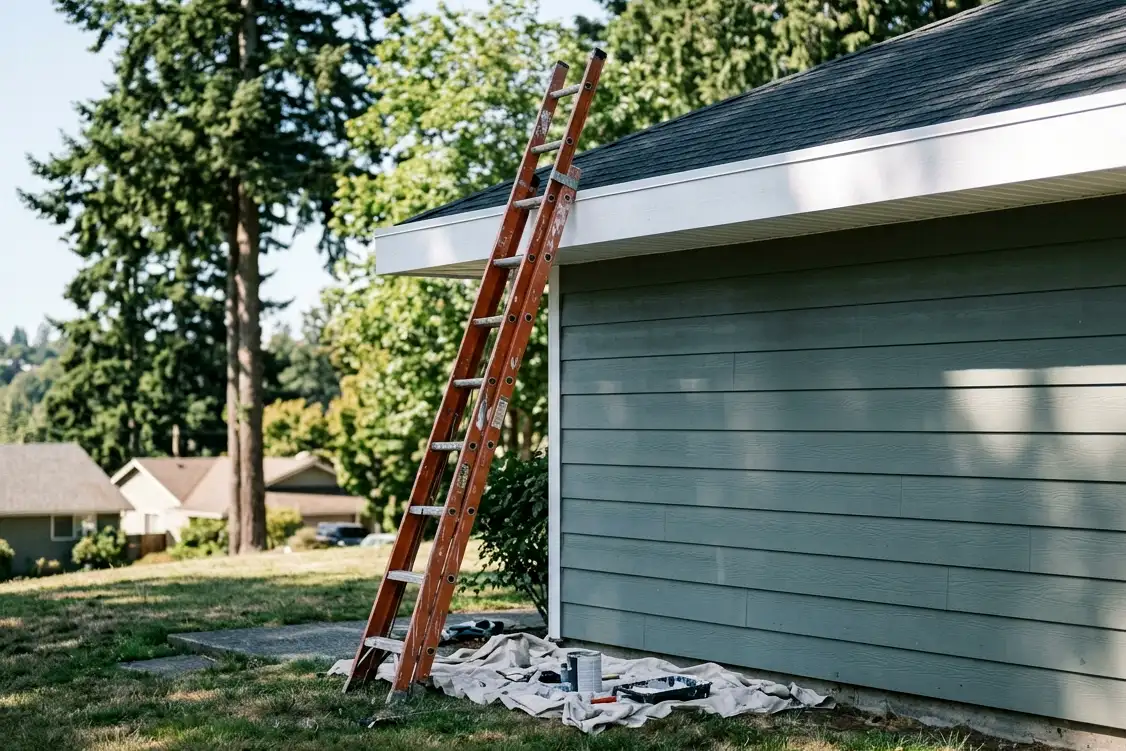
Freshly painted white fascia and soffit under a charcoal roof edge on a fiber cement home in South Hill, ladder resting against the eave
Quick answer

Exterior trim painting is a trim-only repaint: fascia, soffits, rake boards, corner boards and window and door casings, done while the siding still holds up. We wash, scrape, fix soft wood, recaulk joints, spot-prime bare areas and brush on two coats of exterior enamel. On a typical Tacoma home it runs $2,470-$5,830, a usual range only, with your price fixed after we walk the house.

Trim wears out years before siding does on most Tacoma houses. Fascia sits right under the gutter line, sills catch every drop that runs off the glass, and casings take the splash when rain bounces off the ground. On a house where the body color still looks fine from the street, that worn trim is what makes it read as tired. A trim-only repaint fixes the parts that are failing without paying to repaint walls that do not need it yet.

This work fits the years between full repaints. We match the existing trim color or move to a fresh one that still suits the siding, and we prep every board as carefully as we would on a whole house. If the siding turns out to need more than a wash, we say so at the walk-through and price both options side by side. For the full scope, see our exterior house painting page. Call (253) 478-2745 and we'll look over the trim with you, one side of the house at a time.
When to call

Signs it is time for exterior trim painting

Paint curling along the fascia

The board behind the gutter takes overflow and splash, so paint there lifts first. Left alone, water reaches the end grain and rot follows.

Gray, bare wood on window sills

Sills face the sky and hold water after every shower. Once the paint wears through, the wood weathers gray within one wet season.

Spotted or flaking soffits

Soffits stay shaded and damp, so mildew dots and peeling show up there even on houses where the siding looks clean.

Open joints at casing corners

Gaps at miters and where casings meet siding let wind-driven rain slip in behind the trim boards.

Siding fine, trim tired

If the body color still has even sheen and no peeling, a trim-only job can carry the house a few more seasons before a full repaint.

Trim that clashes after an upgrade

A new roof, new windows or a new front door can leave old trim looking off. Repainting only the trim ties the house back together.

Why does exterior trim fail long before the siding does?

Trim boards do the hardest job on the outside of a house. Fascia runs right under the roof edge, so any gutter that spills over in a November downpour soaks it. Window sills and the head casings above them catch water sheeting down the glass. Corner boards and casings expose end grain at every joint, and end grain drinks water far faster than the face of a board. All of that means trim swells and shrinks more than the siding beside it, so paint cracks along its joints first.

Sun adds a second kind of wear. South and west casings in Tacoma bake through July and August, while the north side of the same house can stay damp under the eaves well into June. That cycle breaks down enamel differently on each wall, which is why one window looks fine and the next one over is peeling. On houses built before 1978, trim often carries the oldest paint layers on the building, so scraping there uses ground plastic, misting and careful cleanup every day.

When does a trim-only repaint make sense?

It makes sense when the siding still has even color and a sound film. We check that by looking for chalk, peeling and fading on each wall, and by pressing tape onto a few spots to test adhesion. Fiber cement siding on homes from the 2000s often holds its color well past the point where white fascia and casings look dingy. Painted cedar lap can behave the same way. In those cases, money spent on the trim now is the better use of the budget, and the siding can wait.

It makes less sense when the siding is already chalking heavily or peeling in patches, because you would pay for ladders and setup twice in a short span. We'll tell you plainly which group your house falls into. Color is the other decision. If you keep the current trim color, we match it from a scraped chip. If you want a change, the new color still has to sit well against siding that is staying, and a session with our color consultant can settle that before any paint is bought.

What does each piece of exterior trim need before paint?

Fascia is mostly about water. We check the ends near downspouts and the lower edge where drips collect, and we prime any cut ends and the back edge we can reach. Soffits are about mildew and airflow. Vented soffit panels and the screens behind them get cleaned and kept open, and we use a mildew-resistant finish because that surface rarely sees direct sun. Rake boards on gables are the hardest to reach and often the most weathered, so we plan ladder or lift access for them at the walk-through.

Window and door casings take the most detail work. We cut out cracked caulk where a casing meets the siding, but we leave the gaps under drip caps and sills open so water can drain. Sills get extra sanding and a second coat on the top face, since they wear fastest. Where a sill nose or fascia end has gone soft, we rebuild it through our rot repair service before primer. Entry casings and garage door trim often get a slightly glossier enamel so they wipe clean.

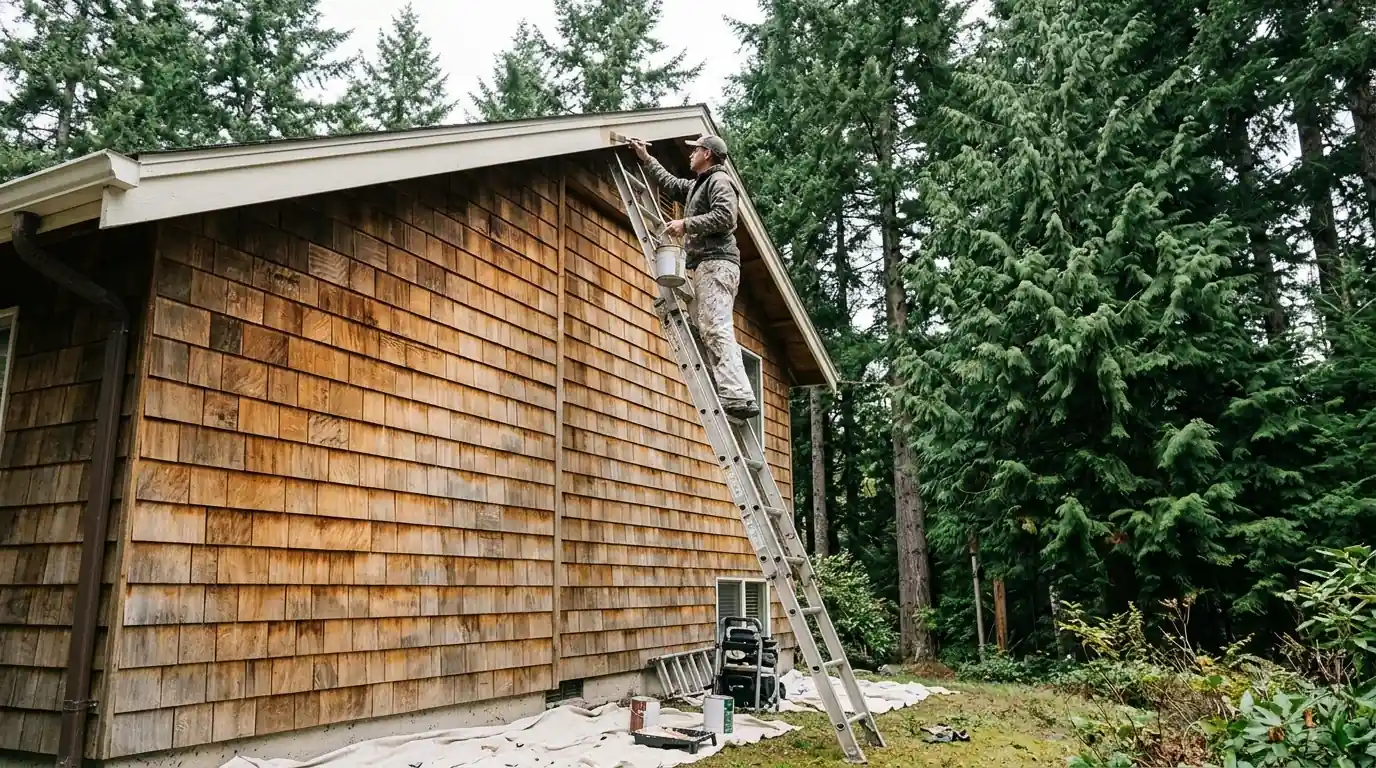
Painter on an extension ladder brushing trim on a cedar-sided house with tall evergreens behind it
Prep sets the finish: most of a paint day goes into the work before color goes on.
What is included

What our exterior trim painting covers

  • Soft wash of fascia, soffits and casings to lift mildew and grime
  • Scraping and sanding loose paint on every trim board around the house
  • Probe testing of sills, fascia ends and corner boards for soft wood
  • Epoxy fills or board replacement where rot has started, priced before work
  • Cutting out failed caulk and resealing casing and corner board joints
  • Spot priming of all bare wood with a quality exterior primer
  • Two brushed coats of exterior acrylic enamel on all trim pieces
  • Lead-safe prep with ground plastic and misting on pre-1978 homes
Job days

How a exterior trim painting job runs

Typical order of work on a Tacoma-area project. Weather can shift exterior days.

  1. D1

    Inspect the trim board by board

    We walk around the house checking each fascia run, sill and casing, and we probe suspect wood with an awl. You get a written price for the painting and a separate line for any repairs.

  2. D2

    Set up and protect

    Siding below the work, plantings, decks and walkways get covered before any scraping starts. On pre-1978 homes, ground plastic goes down along every wall we work on.

  3. D3

    Clean and let it dry

    We soft wash the trim to lift mildew and dirt, then give the wood time to dry out. Sills and fascia get a moisture reading before primer goes on.

  4. D4

    Scrape, repair and seal

    Loose paint comes off, edges get sanded smooth and soft spots get filled or replaced. Cracked caulk is cut out and new sealant goes into the joints that should be closed.

  5. D5

    Prime and brush two coats

    Bare wood gets primer the same day it is exposed whenever weather allows. Two coats of exterior acrylic enamel follow, brushed so the paint works into joints and edges.

  6. D6

    Final look on every side

    We pull coverings, clean up paint chips and walk the trim with you around the whole house. Any thin spot or missed edge gets fixed before we pack up.

Cost

What moves the price of exterior trim painting

Typical range $2,470-$5,830 per home (trim only). These are the things that push a job toward either end.

  1. Linear feet of fascia, rake and corner boards around the house.
  2. Number of windows and doors, and how detailed their casings are.
  3. Height of gables and eaves, and whether a lift is needed to reach them.
  4. How much scraping and sanding the trim needs, which rises on older homes.
  5. Rot repair on sills, fascia ends and casing bottoms found during prep.
  6. Whether soffits are painted wood, vented panels or a mix of the two.
Local

Exterior Trim Painting around Tacoma and Pierce County

Trim-only work is one of our most common summer calls across Pierce County. In South Hill, many 2000s homes have fiber cement siding that still looks good while the primed wood or composite trim around it is peeling at the joints. Fircrest ramblers often have long, low fascia runs and wide soffits that stay damp and collect mildew under tall firs. Out in Browns Point, salt air and wind off Commencement Bay wear down the casings on the water side faster than the sheltered side of the same house. Because a trim job is smaller in scope, it often fits into short dry stretches in late May or September when a full repaint would not.

Where we do the most exterior trim painting

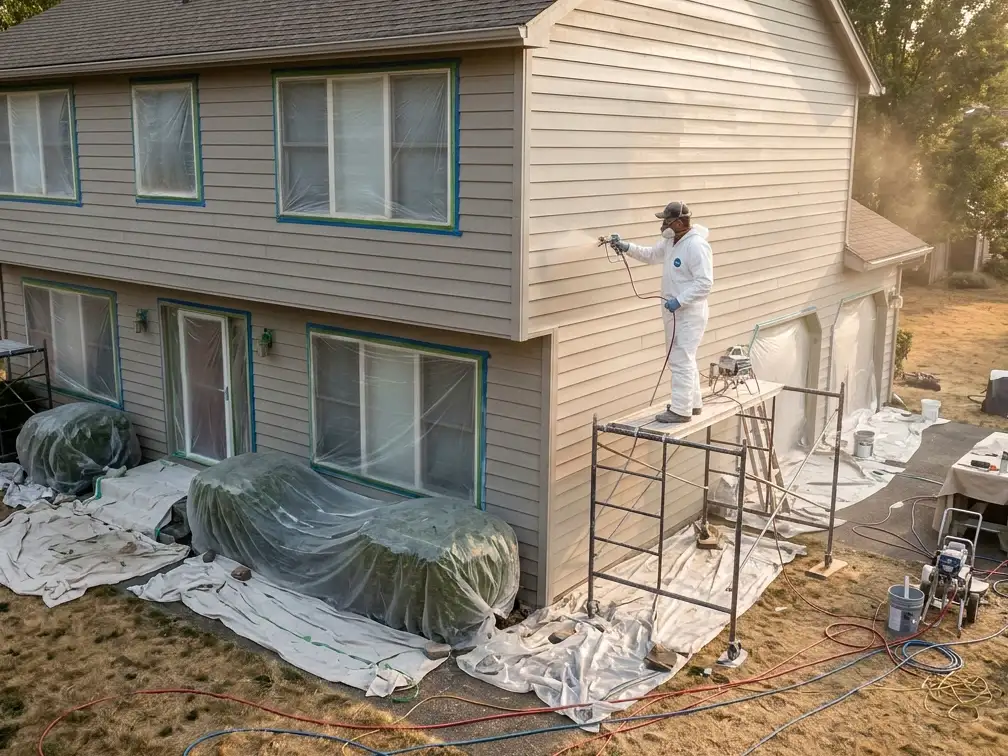
Masked windows and plastic sheeting around a house being sprayed with exterior paint on a dry summer day
FAQ

Exterior Trim Painting questions from Tacoma homeowners

How often should exterior trim be repainted compared to siding?

On most Tacoma houses, trim needs fresh paint before the siding does, often around the midpoint between full repaints. Sills and fascia on the south and west sides usually go first, followed by casings under shallow eaves. A gentle wash each spring and clean gutters stretch that timeline. When we look at your trim, we will tell you whether a touch-up, a trim-only job or a full repaint fits best right now.

Will fresh trim paint look odd next to older siding?

Not if the trim color is matched or chosen with the siding in mind. Bright white trim can look stark beside a body color that has faded, so we sometimes warm the white a shade so it sits well next to aged siding. If the siding is a dark tone, crisp trim usually makes it look richer, not older. We hold samples up against the siding on two sides of the house before any paint is bought.

Can you paint soffits that have vent screens or perforated panels?

Yes. Wood soffits with screened vents get cleaned, and we paint around the screens or mist them lightly so the mesh stays open. Perforated aluminum or vinyl soffit panels can take paint after cleaning and a bonding primer, applied in thin coats so the holes do not fill. Blocking attic ventilation leads to moisture trouble in the attic, so keeping those openings clear is part of the job.

Do you paint gutters and downspouts during a trim job?

We can. Aluminum gutters and downspouts often fade or chalk at the same time as the fascia behind them. We clean off the oxidation, apply a primer made for metal and finish in exterior acrylic matched to the trim or the siding. Downspouts usually get painted to match the wall they run down, so they disappear. Gutters are priced as a separate line so you can decide.

Is it cheaper to paint the trim now and the siding later?

In the short run, yes, since trim is a fraction of the paintable surface. Over time it depends on the siding. If the body still has a sound film, a trim job now and a full repaint later is usually the better spend. If the siding is close to failing, doing both at once saves a second round of setup, ladders and protection. We price both options at the walk-through when the call is close.

Talk to us about exterior trim painting

Call and tell us what you are painting. We answer 24/7 and set up a walk-through at a time that suits you.

Answered 24/7(253) 478-2745