Skip to content
CPCole's Pro PaintingHouse painters, Tacoma and Pierce County Line open 24/7(253) 478-2745
Interior painting, Tacoma

Cabinet painting in Tacoma with a sprayed, factory-smooth finish

Painted cabinets live a hard life.

  • 24/7Phone answered
  • $4,870-$8,640Typical, per kitchen
  • 66Areas we paint
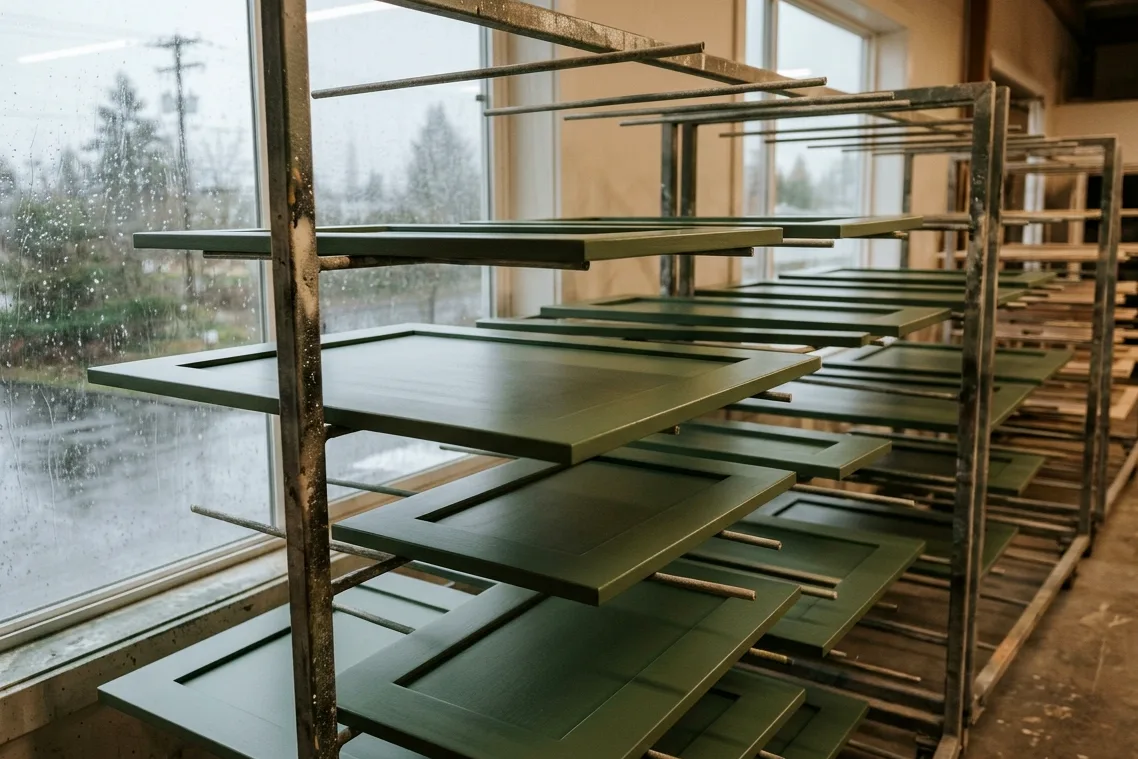
Painted Shaker cabinet doors in deep sage green lined up on drying racks beside a rain-streaked window on a gray Tacoma day
Quick answer

Cabinet painting means removing doors and drawer fronts, degreasing and sanding every surface, priming with a bonding primer and spraying a hard urethane-modified enamel. Boxes are finished in place. In Tacoma, a typical kitchen of 20 to 30 doors and drawers runs $4,870-$8,640, and the kitchen is partly out of use for about a week. Pricing follows a walk-through.

Painted cabinets live a hard life. They get grabbed with greasy hands, splashed at the sink and bumped by chairs, so a cabinet finish has to be much tougher than wall paint. We treat it as a finishing job rather than a paint job: every door and drawer front comes off, gets numbered and goes to our spray racks, while the cabinet boxes in your kitchen are masked and finished in place.

Most of the cabinets we paint around Tacoma are 1990s and 2000s oak with heavy grain, or older painted cabinets that were brushed with wall paint and are now chipping at the edges. Both can look new with the right prep. If your cabinets are solid wood and you like the grain, cabinet refinishing with stain and clear coat may suit you better. We'll look at the wood with you and say which way makes sense.
When to call

Signs it is time for cabinet painting

Orange oak that dates the kitchen

Honey oak from the 1990s is solid and worth keeping, but the color ages a kitchen more than anything else in the room.

Chipping paint on door edges

Wall paint brushed onto cabinets wears through at handles and edges within a few years and has to be redone properly.

Sticky, greasy surfaces

Grease near the range that cleaners will not cut is a sign the old finish is breaking down.

Sound boxes, tired look

If the boxes and doors are solid but the look is wrong, painting costs a fraction of new cabinetry.

New counters on the way

Painting right before or after a countertop swap lets the whole kitchen change without replacing cabinets.

Vanities that do not match

Bathroom vanities, laundry cabinets and built-ins can be painted to match the kitchen in the same job.

Why spray cabinets instead of brushing them?

A brushed cabinet door almost always shows it. Brush marks catch light along the stiles, enamel sags at the inside corners of raised panels and edges come out thin. Spraying lays down a level coat of even thickness everywhere, which is what makes painted cabinets look like they came from a shop. We spray doors and drawer fronts flat on racks so the finish levels out as it dries, then flip them and do the backs.

The boxes stay in your kitchen, so they are masked with plastic and paper, and we finish the frames with a fine-finish sprayer or a quality brush and foam roller depending on the space. We use urethane-modified acrylic or waterborne alkyd enamels. They level out like oil, cure harder than wall paint and do not yellow the way old oil enamels did, which matters a lot when the cabinets are white.

What to do about the grain on oak cabinets

Oak has open pores that show right through paint. Some people like that subtle texture; it reads honest and a little traditional. Others want a smooth face that looks like maple or MDF. For a smooth look we apply grain filler, let it cure, sand it flat and then prime, sometimes twice on the most visible doors. It adds labor, which is why we price it as an option and show you sample doors first.

Before anything else, we check what the old finish is. Many 1990s cabinets carry a catalyzed lacquer that paint will not grip without a scuff sand and a bonding primer. If the doors have been waxed or wiped with oil soap for years, we degrease twice. The adhesion test is simple: we prime a hidden spot, let it cure and try to pull it off with tape. If it holds there, the whole job holds.

How long the kitchen is out of service, and how we plan around it

A typical kitchen takes five to eight working days from removal to rehang. The first day or two covers removal, cleaning and masking. Doors then go through sanding, priming and two finish coats with full drying time between each, which in damp Tacoma weather can take longer than the label says. The boxes are done in parallel in the kitchen, and your fridge and sink stay usable through most of it.

We tell clients to plan on simple meals that week. Counters are covered, upper boxes may be wet for an afternoon, and you will want to keep pets out while the boxes cure. Once doors go back on, the finish is dry but still curing, so treat it gently for about two weeks. Pair the job with a color consultation if you are deciding between white, greige and a deep green or navy island.

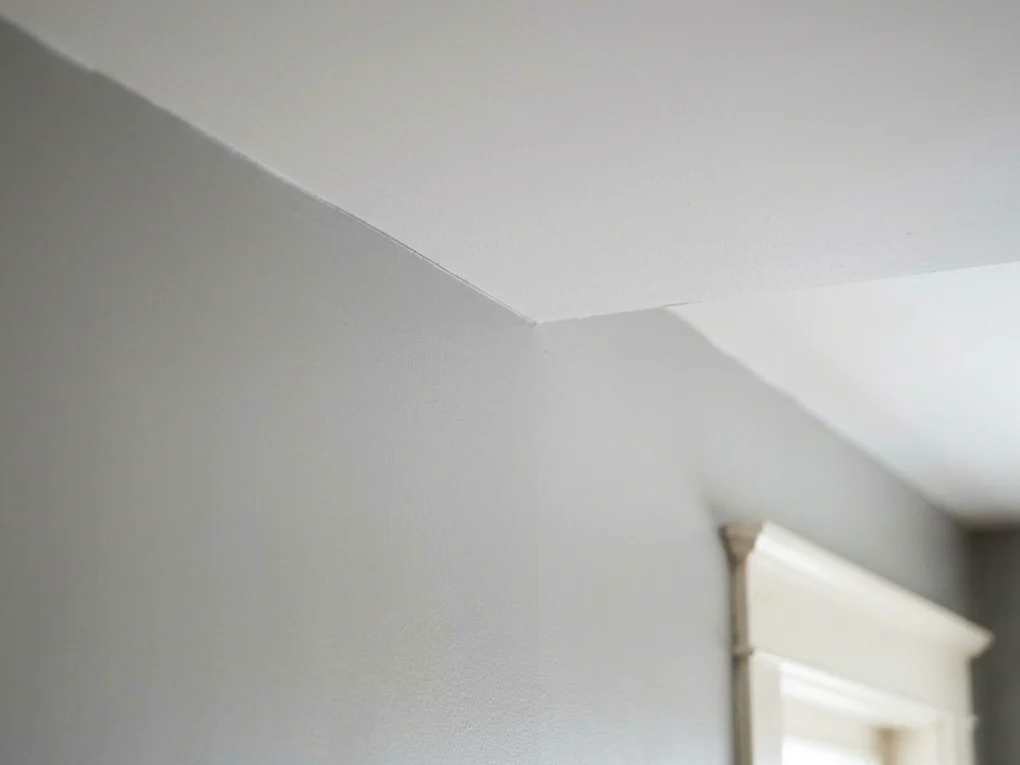
Close view of a crisp cut line between a soft gray wall and a white ceiling in a North Tacoma dining room
Prep sets the finish: most of a paint day goes into the work before color goes on.
What is included

What our cabinet painting covers

  • Doors, drawer fronts and hardware removed, labeled and bagged
  • Full degrease with a cabinet-specific cleaner, then a clean rinse
  • Scuff sanding of every face, edge and face frame
  • Grain filling on oak when you want a smooth modern face
  • Bonding primer that grips old lacquer and varnish
  • Two sprayed coats of urethane-modified cabinet enamel
  • Kitchen masked in plastic with counters and floors protected
  • Doors rehung, hinges adjusted and hardware reinstalled
Job days

How a cabinet painting job runs

Typical order of work on a Tacoma-area project. Weather can shift exterior days.

  1. D1

    Look and test

    We count doors and drawers, check the wood and old finish, and test adhesion on a hidden spot. You choose the color, sheen and grain approach.

  2. D2

    Remove and label

    Every door, drawer front and hinge comes off and is numbered to its opening. Hardware is bagged and labeled.

  3. D3

    Clean and sand

    All surfaces are degreased, rinsed and scuff sanded. Dents and old hardware holes are filled if you are changing pulls.

  4. D4

    Prime

    A bonding primer goes on every surface and is sanded smooth once cured. Grain filler goes on first if you chose a smooth face.

  5. D5

    Spray finish coats

    Doors get two sprayed coats on racks, front and back. Boxes and frames are finished in place under masking.

  6. D6

    Rehang and adjust

    Doors and drawers return to their original openings and hinges are adjusted so the gaps line up. We do the final check with you.

Cost

What moves the price of cabinet painting

Typical range $4,870-$8,640 per kitchen. These are the things that push a job toward either end.

  1. The total count of doors, drawer fronts, end panels and open shelves.
  2. Grain filling oak for a smooth face, which adds several labor steps.
  3. Whether cabinet interiors are painted or left in their current finish.
  4. Raised-panel doors with deep profiles versus flat slab or Shaker fronts.
  5. Heavy grease, old wax or failing earlier paint that must be stripped.
  6. Drilling for new hardware and filling old pull holes.
Local

Cabinet Painting around Tacoma and Pierce County

Tacoma has plenty of kitchens that are perfectly sound but stuck in 1995. In University Place, Lakewood and Federal Way, oak kitchens in split-levels and two-stories are the most common cabinet job we see. In the Proctor District and North Tacoma, older homes sometimes have original fir built-ins with many layers of paint, which take extra stripping and careful lead-safe prep before priming. Our damp winters also stretch dry times between coats, so we keep doors in a heated, ventilated space where the enamel cures properly instead of sitting in a cold garage.

Where we do the most cabinet painting

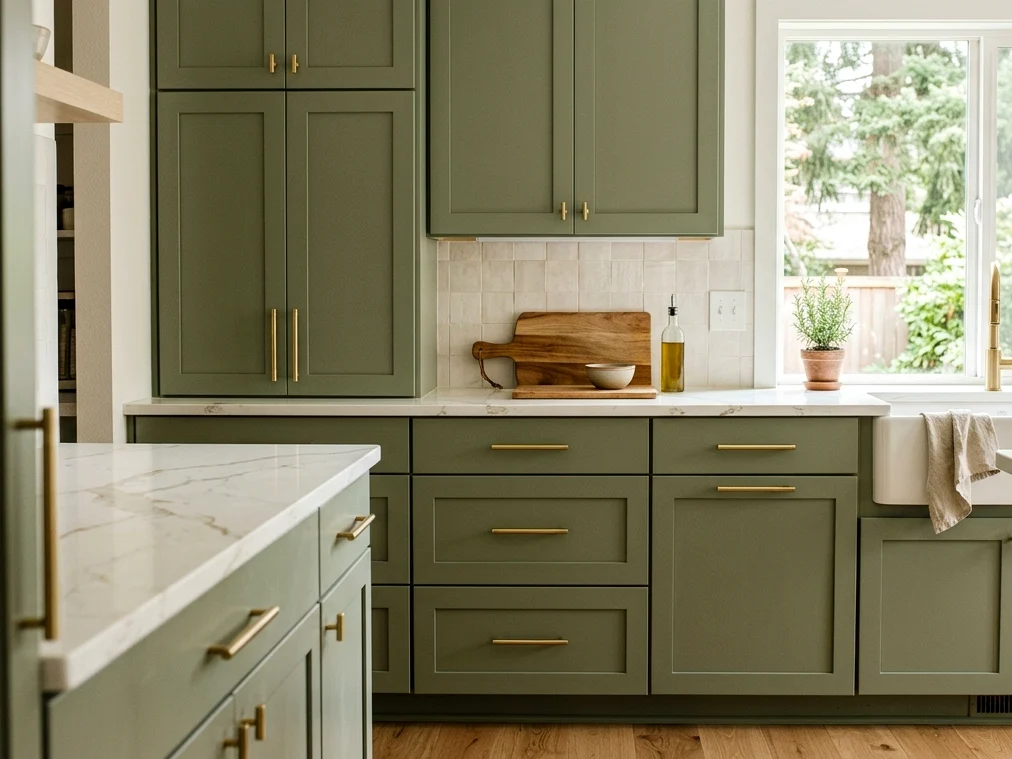
Kitchen with newly painted sage green cabinets, brass pulls and quartz counters in a University Place home
FAQ

Cabinet Painting questions from Tacoma homeowners

How long does a painted cabinet finish last?

With proper cleaning, sanding, a bonding primer and a cabinet-grade enamel, a painted kitchen holds up for many years of normal use. Wear shows first on the doors you grab most, like the trash pullout and the sink base. We leave labeled touch-up paint for small chips. Skip harsh cleaners and wipe up water at the sink edges.

Can you paint cabinets that already have paint on them?

Usually, yes. If the old paint is holding tight, we clean, sand and prime over it. If it is chipping, peeling or was brushed on thick with wall paint, we strip the loose material and sand back to a solid base first. Older homes may have layers containing lead, and those get lead-safe prep before any sanding.

Do you paint the inside of the cabinets too?

We can, but most people leave the interiors in their original finish, which keeps the price down and avoids emptying every shelf for a week. If the insides are worn, or you are changing color on open shelving or glass-front uppers, we include them and price them as a separate line on the estimate.

Will painted oak cabinets still show the grain?

Without grain filler, yes, a light oak texture will show through the finish. Some people like that look. For a smooth face, we apply grain filler, sand it level and prime before color. We usually finish a sample door both ways so you can hold them up in your own kitchen and decide.

Can I keep using my kitchen during cabinet painting?

Mostly. Your fridge, sink and stove stay usable through most of the job, though doors will be off and counters covered on some days. Most clients plan easy meals for that week. We schedule the box finishing so the kitchen is fully masked for the shortest stretch we can manage.

Talk to us about cabinet painting

Call and tell us what you are painting. We answer 24/7 and set up a walk-through at a time that suits you.

Answered 24/7(253) 478-2745