Skip to content
CPCole's Pro PaintingHouse painters, Tacoma and Pierce County Line open 24/7(253) 478-2745
Interior painting, Tacoma

Drywall repair in Tacoma, patched and textured to disappear

A drywall patch is only finished when you cannot find it.

  • 24/7Phone answered
  • $340-$790Typical, per visit
  • 66Areas we paint
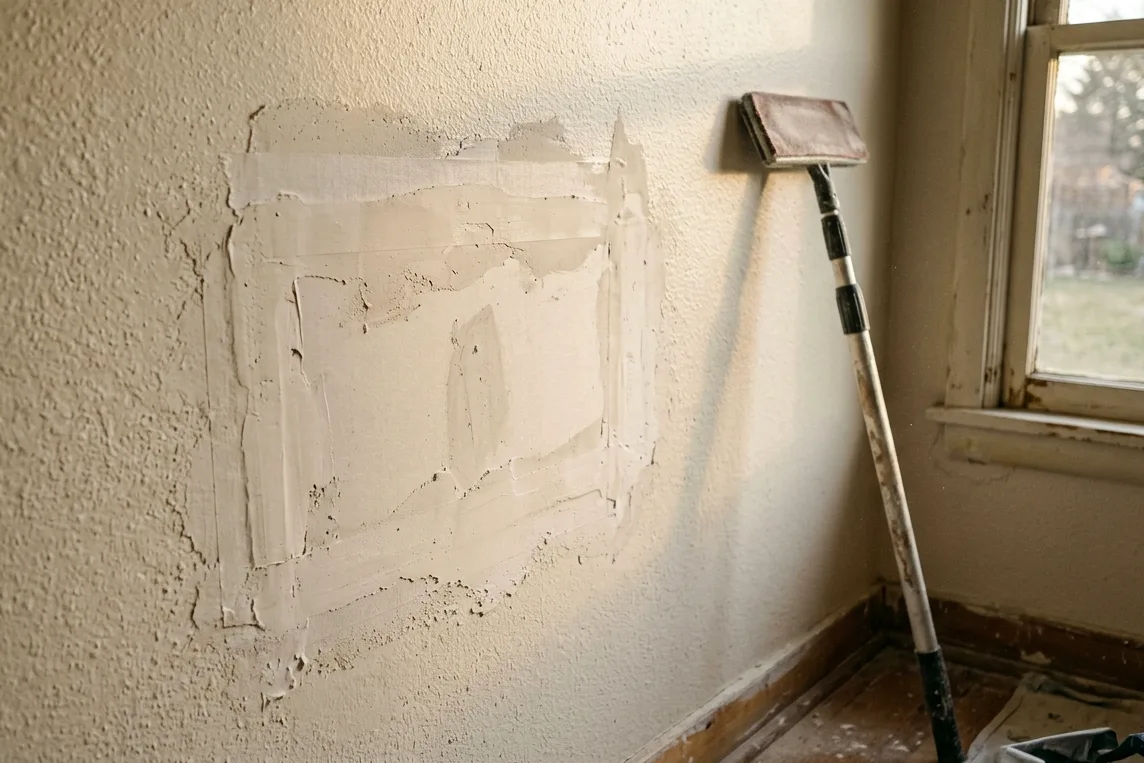
Freshly taped and feathered drywall patch on an orange peel wall beside a window in a Lakewood rambler, sanding pole leaning nearby
Quick answer

Drywall repair covers patching holes, retaping cracked seams, fixing nail pops and water-damaged spots, then matching the wall texture and priming so the repair disappears once painted. In Tacoma, a typical visit for several small to medium repairs runs $340-$790, and a larger water-damage patch with texture and paint runs $860-$1,940. Pricing follows a look at the damage.

A drywall patch is only finished when you cannot find it. That takes more than filling the hole: the patch has to sit flat with the wall, the texture has to match what is around it, and the primer has to seal the mud so paint does not dull over the repair. We do all of it, from the doorknob hole in a hallway to a soaked ceiling section after a roof leak or a burst supply line.

Most of our drywall work happens right before painting, which is the best time for it. Patches get primed and finished in the same visit as the interior painting, so you are not left with white squares on a beige wall. We also handle repair-only calls: cracks over doorways, nail pops on new homes and holes left behind after removing a wall-mounted TV.
When to call

Signs it is time for drywall repair

Cracks running from door and window corners

Diagonal cracks from corners usually come from framing movement and come back unless the seam is retaped with mesh.

Nail pops in rows

Small round bumps in a line along a stud are common in newer homes as the lumber dries and shrinks.

Brown rings on the ceiling

Water stains mean a past or current leak. The source needs fixing first, then the stain needs sealing or the board replacing.

Soft or sagging drywall

Board that feels spongy or bows down has lost strength from water and has to be cut out and replaced.

Holes from anchors and mounts

Removing shelves, TV mounts and curtain rods leaves holes too large for a dab of spackle.

Peeling tape at seams

Lifting paper tape, often in bathrooms, means the joint has failed and needs to be cut back and redone.

How do you match orange peel and knockdown texture?

Texture is what gives most drywall repairs away. A patch troweled perfectly smooth on an orange-peel wall will stand out as a flat square the moment side light hits it. Most homes built in the Tacoma area from the 1970s on have orange peel or knockdown, and the exact pattern varies from house to house depending on how thick the original mud was and how far the sprayer was held from the wall.

We match it on site. We use a hopper gun or aerosol texture for orange peel and adjust the mix and air pressure on a piece of scrap until the spatter size looks right next to your wall. Knockdown gets a spray of thicker mud and a pass with a knockdown knife at the right moment. Older plaster homes in Old Town and Hilltop are usually smooth, and those repairs get skim coats and careful sanding instead.

What to do about water-stained drywall after a leak

Before we touch a water stain, we want to know the water has stopped. In our climate, the usual causes are a failed roof flashing, a bathroom above, a slow plumbing drip, or condensation in an attic that is not venting well. We check the area with a moisture meter. If it still reads wet, the repair waits until the source is fixed and the board has dried, or the stain will simply come back.

If the board is dry and firm, we seal the stain with an oil-based or shellac primer, which stops the brown ring from bleeding through the new paint. If the board is soft, sagging or shows mold growth on the back, we cut it out to the nearest framing, replace it, tape, texture and prime. Ceiling repairs then get matched with ceiling painting wall to wall so there is no visible line.

Why some wall cracks keep coming back

A crack that returns after every repaint is a crack that was filled, not fixed. Houses move. Wood framing swells and shrinks with our long wet season and dry summers, and that movement concentrates at door and window corners, along ceiling joints, and where additions meet the original house. Spackle and paint cannot stretch with that movement, so the crack reopens along the same line within a season or two.

The fix is to cut a shallow groove along the crack, embed mesh or paper tape in setting compound, and feather the joint wide so the stress spreads over a larger area. Where walls meet ceilings and cracks keep reappearing, a flexible caulk line at the corner can hold better than tape. If you are seeing new cracks along with sticking doors or sloping floors, have the structure checked before we patch.

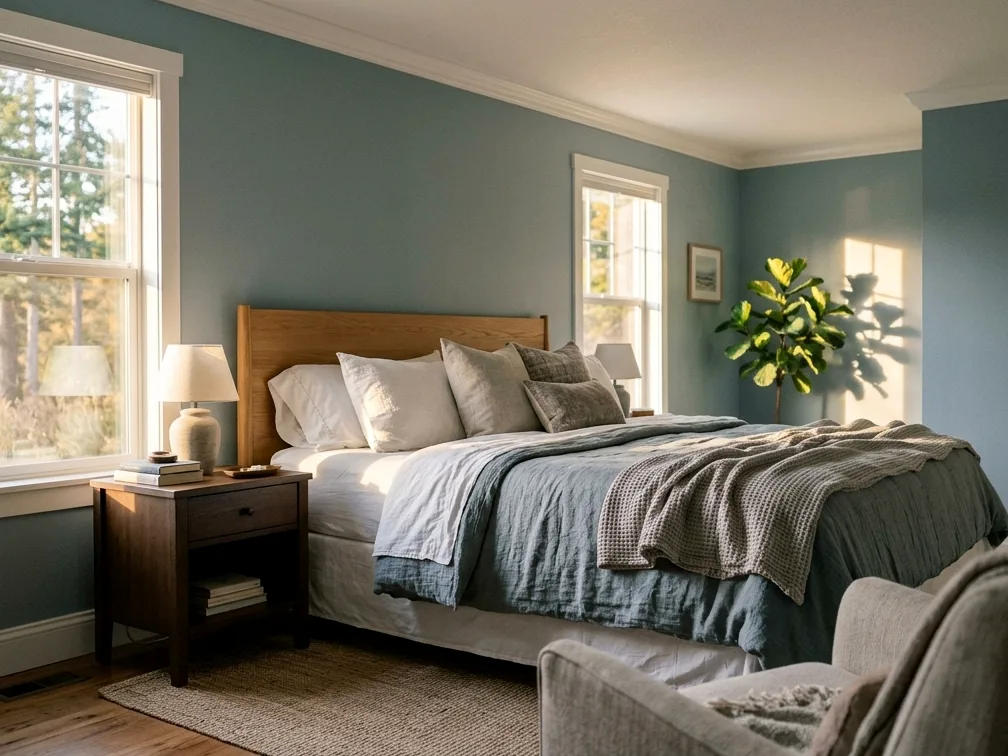
Primary bedroom painted a quiet blue gray with crisp white ceiling in a Gig Harbor home
Prep sets the finish: most of a paint day goes into the work before color goes on.
What is included

What our drywall repair covers

  • Inspection of each damaged area and a check for active moisture
  • Cutting out failed tape, soft board and crumbled patch material
  • New drywall pieces screwed to framing or backer strips
  • Mesh or paper tape bedded in setting compound on seams
  • Multiple thin finish coats feathered wide and sanded smooth
  • Texture matched to orange peel, knockdown or smooth walls
  • Stain-blocking primer over water marks and fresh mud
  • Dust control with plastic sheeting and HEPA vacuum cleanup
Job days

How a drywall repair job runs

Typical order of work on a Tacoma-area project. Weather can shift exterior days.

  1. D1

    Assess the damage

    We look at each repair, check for moisture and confirm what caused it. You get a price for the repairs and for painting them in.

  2. D2

    Protect the room

    Floors and furniture near the repair are covered and plastic sheeting goes up where we will sand. Vents nearby are closed off.

  3. D3

    Cut out and rebuild

    Failed tape, soft board and loose patches are removed. New board goes in where needed, fastened to framing or backer strips.

  4. D4

    Tape and mud

    Seams and patches are taped and covered with thin coats of compound. Each coat is feathered wider and sanded once it has set.

  5. D5

    Texture and prime

    We match the surrounding texture on scrap, then apply it to the repair. Fresh mud and stains get the right primer.

  6. D6

    Paint and clean up

    Repairs are painted in, usually corner to corner so they blend fully. We HEPA vacuum the work area before we leave.

Cost

What moves the price of drywall repair

Typical range $340-$790 per visit. These are the things that push a job toward either end.

  1. The number and size of repairs, and whether full board replacement is needed.
  2. Texture type, since smooth plaster-style walls take more finish coats.
  3. Ceiling repairs, which take more setup and are slower than wall work.
  4. Moisture damage that requires drying time before patching.
  5. Whether you want the repaired walls painted wall to wall.
  6. Access around stairwells, high walls and built-in furniture.
Local

Drywall Repair around Tacoma and Pierce County

The repairs we see shift with the housing stock. In newer subdivisions around Bonney Lake, South Hill and Federal Way, nail pops and seam cracks show up in the first few years as framing lumber dries out. In 1960s and 1970s ramblers in Lakewood and University Place, we mostly fix old patch jobs, water stains under bathrooms and cracked corner bead. Older homes in Hilltop and Old Town often have plaster and lath, which needs different materials than drywall, and those houses get lead-safe prep when we disturb old painted surfaces. Wet winters mean leaks get noticed most often between November and March.

Where we do the most drywall repair

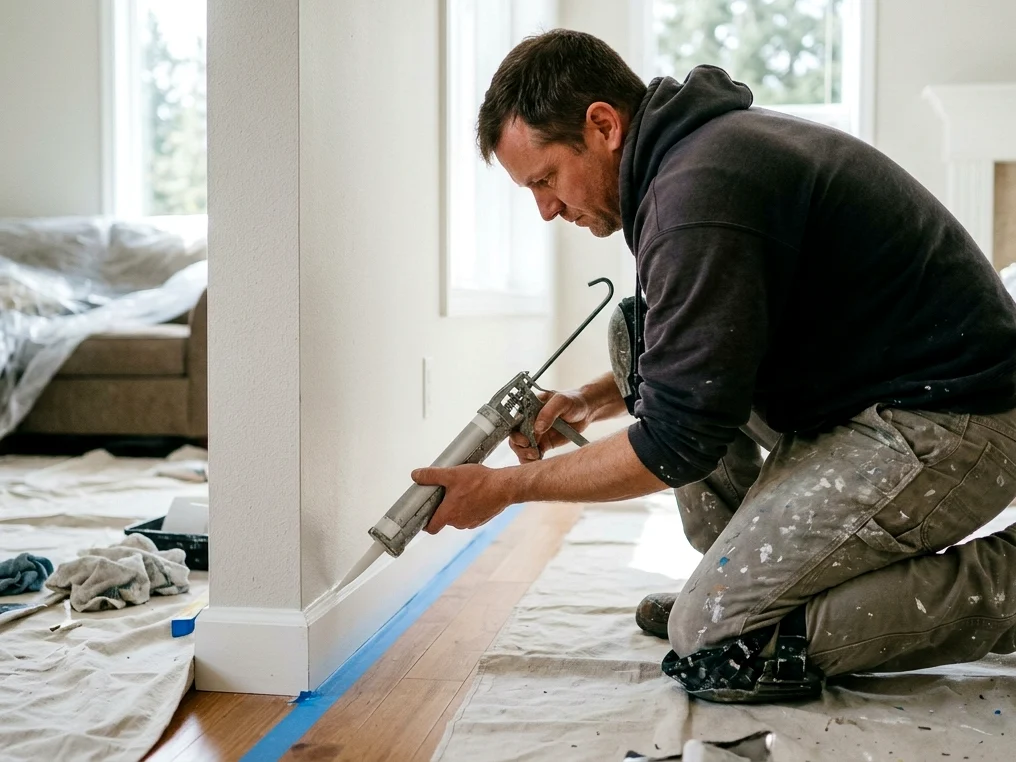
Painter caulking the joint between baseboard and wall before paint in a Puyallup living room
FAQ

Drywall Repair questions from Tacoma homeowners

Can you repair drywall without repainting the whole wall?

Sometimes, if the existing paint is fairly new and you have leftover paint from the same can. Even then, a patch painted with a small roller often shows a slight difference in sheen. For an invisible result, we paint the repaired wall from corner to corner. On ceilings, we nearly always repaint the whole ceiling.

How long does a drywall patch need before painting?

With setting compounds, small patches can be sanded, textured and primed the same day. Larger repairs with several coats of mud may need a second visit. Damp, cold weather slows drying, so in winter we sometimes run a fan or heater in the room. We plan the schedule so paint never goes over soft compound.

Do you fix plaster walls as well as drywall?

Yes. Many older Tacoma homes have plaster over wood lath, and repairing it is a bit different. We reattach loose plaster with plaster washers, fill cracks with setting compound and mesh, and skim coat damaged areas smooth. Because plaster homes are often pre-1978, we test and use lead-safe methods where old paint will be disturbed.

What about drywall damaged by a leak with mold on it?

Small patches of surface mold on painted drywall can be cleaned and sealed once the area is dry. If mold is growing on the back of the board or inside the wall, the affected drywall needs to come out, and larger areas call for a mold remediation specialist before we rebuild. We will tell you honestly which you are looking at.

Can you fix the holes left after removing a TV mount?

Yes, that is one of our most common calls. TV mounts and anchors leave holes from a quarter inch up to fist-sized where anchors pulled out. We cut a clean patch, back it, tape and mud it, match the texture and prime it. Painted in with the wall, the spot is hard to find.

Talk to us about drywall repair

Call and tell us what you are painting. We answer 24/7 and set up a walk-through at a time that suits you.

Answered 24/7(253) 478-2745