Skip to content
CPCole's Pro PaintingHouse painters, Tacoma and Pierce County Line open 24/7(253) 478-2745
Wood & Stain painting, Tacoma

Deck staining in Tacoma for cedar, fir and treated lumber

Decks in the Puget Sound area live through months of rain, needles and moss, then a few hot summer weeks that dry the boards fast.

  • 24/7Phone answered
  • $1.85-$4.35Typical, per sq ft of deck surface
  • 66Areas we paint
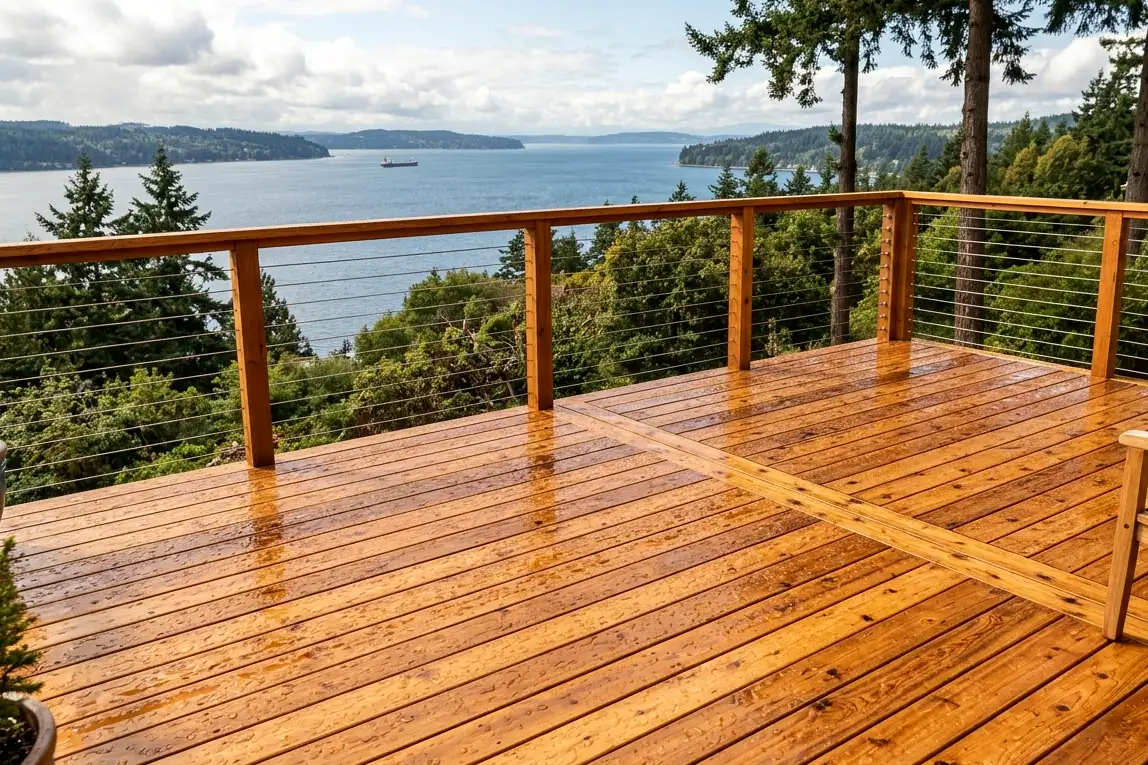
Raised cedar deck freshly stained a warm amber tone overlooking Puget Sound in Northeast Tacoma, water beading on the boards after light rain
Quick answer

Deck staining in Tacoma means cleaning off moss and gray wood, sanding rough or failing areas, brightening, then applying a penetrating stain to the boards, rails and stairs once the wood reads about 15% moisture. A typical deck runs $1.85-$4.35 per sq ft of deck surface after a walk-through, depending on wood type, old finish, railings and stairs.

Decks in the Puget Sound area live through months of rain, needles and moss, then a few hot summer weeks that dry the boards fast. That swing is hard on wood. Gray boards, black mildew lines between the gaps, splinters on the stairs and slick green patches near the hose bib are what we see on most decks before a stain job, from waterfront decks in Northeast Tacoma to low backyard decks in Puyallup and Bonney Lake.

A good stain job is mostly patience. We clean and brighten the wood, sand where the surface is rough or the old coating is peeling, then wait for dry readings before any stain goes on. We favor penetrating stains over thick deck paints and solid film coatings that tend to peel in this climate. If the deck rails are metal, we can handle those through our metal railing and gate painting service at the same visit. Call (253) 478-2745 to have us walk your deck.
When to call

Signs it is time for deck staining

Water darkens the boards right away

If a spilled glass of water soaks in instead of beading, the stain is gone and the boards are absorbing rain.

Gray or silver surface

UV has broken down the top layer of wood fibers, and stain will not hold until that layer is cleaned off.

Peeling or flaking finish

A film-forming stain or deck paint that is lifting needs to come off before anything new goes down.

Moss or slippery green film

Organic growth holds water on the boards and makes stairs dangerous during the wet months.

Splinters and raised grain

Rough boards snag bare feet and show the wood is drying out and checking between wet seasons.

Dark lines along the gaps

Black edges along board seams mean mildew and debris are trapping water where boards meet the joists.

Why do deck stains peel so often in the Pacific Northwest?

Peeling is almost always a film problem. Thick solid deck stains and deck paints form a skin on top of the wood. In a dry climate that skin can last, but here the boards take on water from below, at the ends and through every fastener hole. The moisture pushes up, the skin loses grip, and it peels in patches. Once that starts, the deck looks worse each season, and the fix means stripping and sanding the failed coating off.

That is why we lean toward penetrating, semi-transparent or oil-based stains on most Tacoma decks. They soak in and let the wood breathe, so they fade over time rather than peel. When they wear, the next coat is a wash and a fresh application, not a strip job. Where someone wants an opaque color, we look closely at the deck's ventilation and moisture readings before agreeing to a solid stain, and we explain the maintenance tradeoff up front.

Does pressure-treated lumber need different deck stain prep?

Yes. Treated lumber, the green or brown pine used on most decks built since the 1990s, often stays wet from the treatment process for months after building. Staining too soon traps that moisture and the stain will not soak in. We check readings and tell you honestly if a newer deck should wait a season. Treated wood also has a tighter surface that benefits from a cleaner and brightener to open the grain before stain goes on.

Cedar and fir decks act differently. Cedar takes penetrating stain well but is soft and easy to gouge, so we wash it gently and sand by hand on the rails. Old fir decks on older homes around Old Town and the West Slope are often very dense and dry unevenly, so they may need two thin coats. Composite and PVC decking is not stained at all. We clean those and can paint the wood rails, posts and fascia around them.

What can I do between stain jobs to keep the deck looking good?

The most useful habit is keeping the gaps clear. Fir needles, leaves and grit pack into the spaces between boards and stay wet all winter, which feeds mildew and rot along the joists. A putty knife or a stiff broom run along the seams in fall and spring goes a long way. Moving planters and furniture now and then also helps, since pots that sit in the same spot leave dark rings that never dry.

A gentle cleaning each spring with a deck wash and a soft brush, not a high-pressure wand, keeps moss from taking hold. Then watch the sunniest boards and the stair treads. When water stops beading there, it is time for a maintenance coat, usually on the high-traffic areas first. Staying ahead of it keeps the cost low. Many homeowners pair the deck with fence staining so the colors match and the prep is shared.

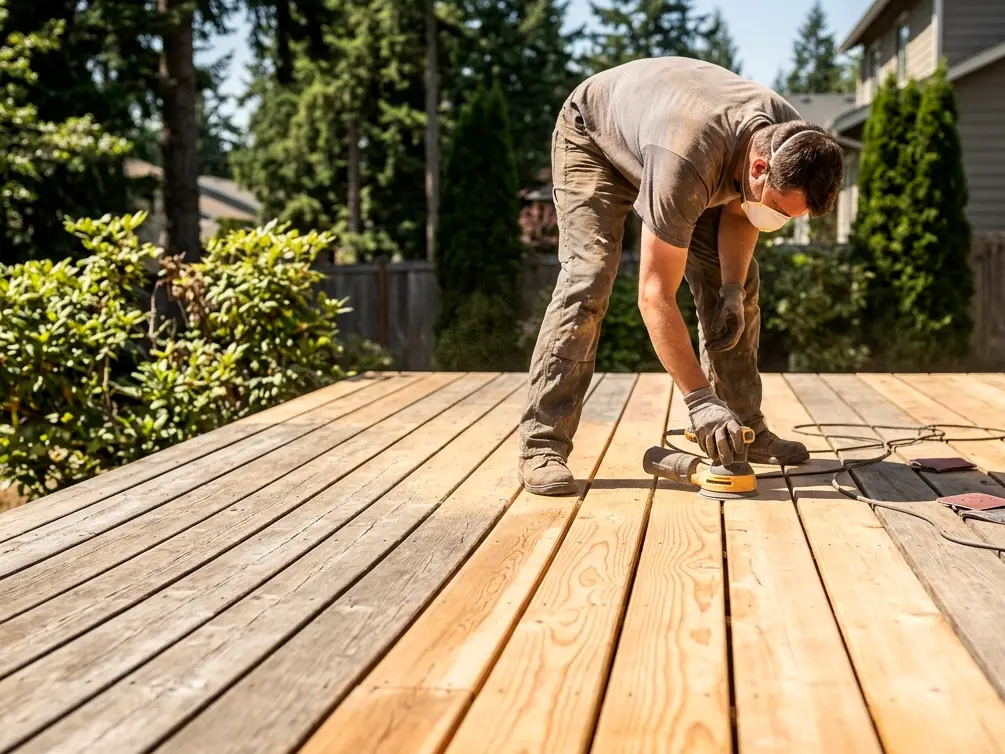
Deck boards being sanded before stain on a sunny Puyallup afternoon
Prep sets the finish: most of a paint day goes into the work before color goes on.
What is included

What our deck staining covers

  • Board-by-board check for soft spots, loose fasteners and moisture
  • Clearing debris from board gaps where water and needles collect
  • Deck cleaner and low-pressure wash to remove moss and mildew
  • Stripping of failing film stain or old deck paint where needed
  • Brightener to restore wood color and neutralize the cleaner
  • Sanding of rough boards, handrails and stair treads
  • Penetrating stain on decking, rails, stairs and visible fascia
  • Protection for siding, doors and plants, plus full cleanup
Job days

How a deck staining job runs

Typical order of work on a Tacoma-area project. Weather can shift exterior days.

  1. D1

    Inspect the deck

    We walk the boards, rails and stairs, check moisture and note any rot or loose fasteners. You get a stain choice and a range.

  2. D2

    Protect and clear

    Furniture comes off, siding and doors are covered, and plants are wet down and shielded. Gaps are cleared of packed debris.

  3. D3

    Clean or strip

    Deck cleaner and a low-pressure wash lift moss and gray fibers. Failing film coatings get a stripper and extra scrubbing.

  4. D4

    Brighten and dry

    A brightener restores the wood color and neutralizes the cleaner. We wait for dry readings, usually a few clear days.

  5. D5

    Sand problem areas

    Rough boards, handrails and stair treads are sanded smooth. Sanding dust is blown off the deck before any stain goes on.

  6. D6

    Stain and cure

    Stain is applied to rails first, then boards, working along full lengths to avoid lap marks. We tell you when it is ready for feet and furniture.

Cost

What moves the price of deck staining

Typical range $1.85-$4.35 per sq ft of deck surface. These are the things that push a job toward either end.

  1. Wood type: cedar, fir, pressure-treated pine or a mix of boards.
  2. Whether a failing film stain or deck paint must be stripped first.
  3. The number of balusters, stair runs and built-in benches or planters.
  4. Deck height and access, especially second-story or hillside decks.
  5. Semi-transparent versus solid stain and the number of coats needed.
  6. Small board replacements or fastener fixes found during the inspection.
Local

Deck Staining around Tacoma and Pierce County

Tacoma-area decks come in every type. Waterfront and view homes in Northeast Tacoma, Dash Point and Gig Harbor often have large raised cedar decks facing the Sound, which means salt air, strong late-day sun and high access. In Puyallup, South Hill and Bonney Lake, newer tract homes tend to have pressure-treated decks with treated or metal rails, often under tall firs that drop needles into every gap. Older homes in Old Town and the West Slope sometimes still have fir decks and porches built decades ago. Because boards must be dry before staining, most deck work falls between late May and mid September, and we book that window early.

Where we do the most deck staining

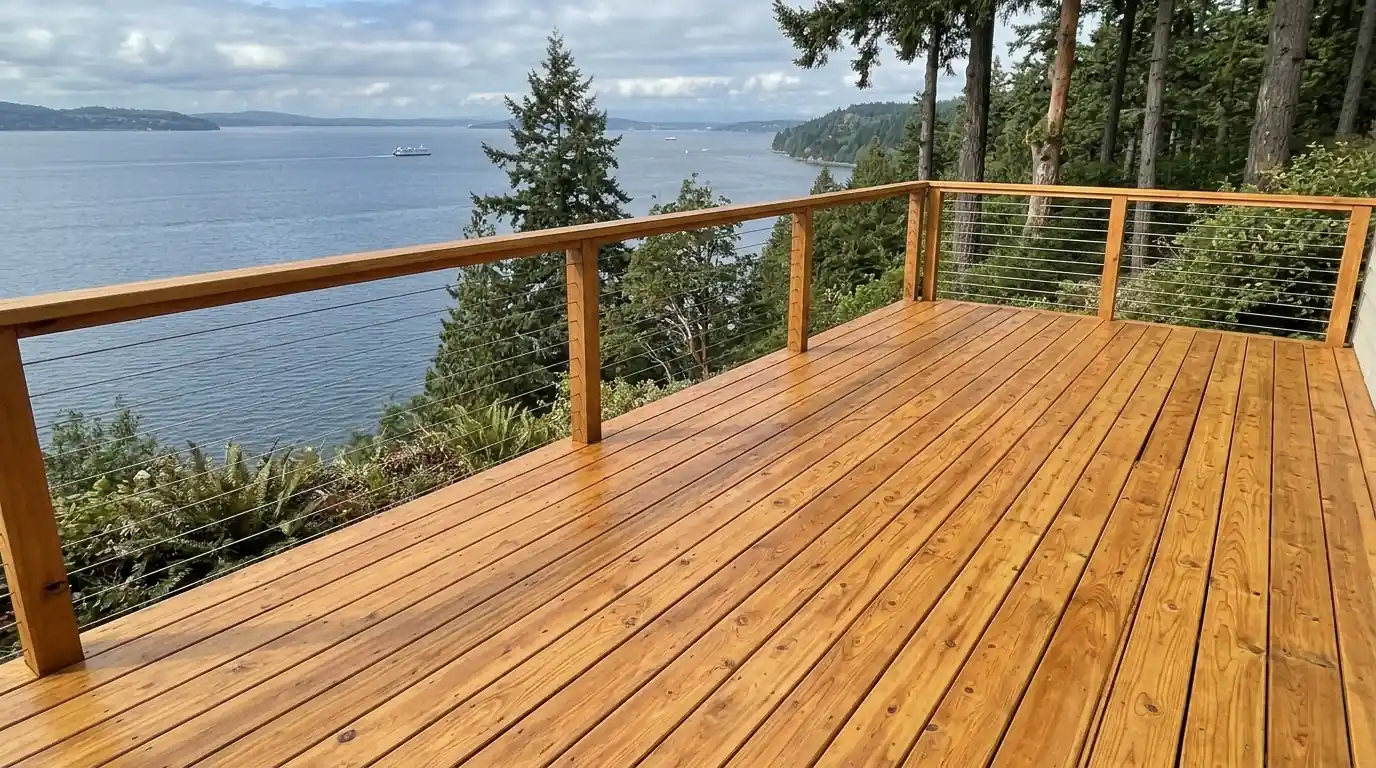
Cedar deck freshly stained in a semi-transparent honey tone overlooking Puget Sound near Tacoma
FAQ

Deck Staining questions from Tacoma homeowners

How long should a stained deck stay off limits?

Most penetrating stains are dry to light foot traffic within a day in summer weather. Furniture, grills and planters should wait two to three days so nothing sticks or leaves rings. Pets should stay off until the surface no longer feels tacky. If cool nights or dew roll in, cure times stretch, and we will tell you the specific timing for the product we used.

Can you stain a deck that has a solid stain on it already?

If the solid stain is still sound, we can clean it and recoat with another solid stain. If it is peeling, it needs to be stripped and sanded first, because new coating over failing coating peels right along with it. Going from solid to semi-transparent requires removing nearly all the old stain, which is real work. We test an area and give you an honest view of the options.

Should the deck stain match the house siding?

Not necessarily. Many decks look best in a warm wood tone that complements the siding instead of matching it, especially on painted homes. On cedar-sided houses, using the same stain family on the deck and siding gives a unified look. We can bring samples on your actual boards, since stain color shifts a lot by wood species. Our color consultation can help with the bigger picture.

Do you replace damaged deck boards before staining?

We handle small fixes like re-setting popped nails, adding screws to loose boards and swapping a few cracked or soft boards with matching lumber. New boards are cleaned and conditioned so they take stain closer to the rest. If we find rotted joists, beams or a failing ledger board, we show you and recommend a carpenter before any staining, since coating over structural problems wastes your money.

Is a clear deck sealer enough in Tacoma?

Clear sealers repel water but have little or no pigment, so they offer weak UV protection. The deck usually turns gray within a season even though the boards stay dry. A lightly tinted semi-transparent stain adds pigment that blocks UV while still showing the grain. For most Tacoma decks with any sun exposure, a tinted penetrating stain lasts longer and looks better between maintenance coats.

Talk to us about deck staining

Call and tell us what you are painting. We answer 24/7 and set up a walk-through at a time that suits you.

Answered 24/7(253) 478-2745