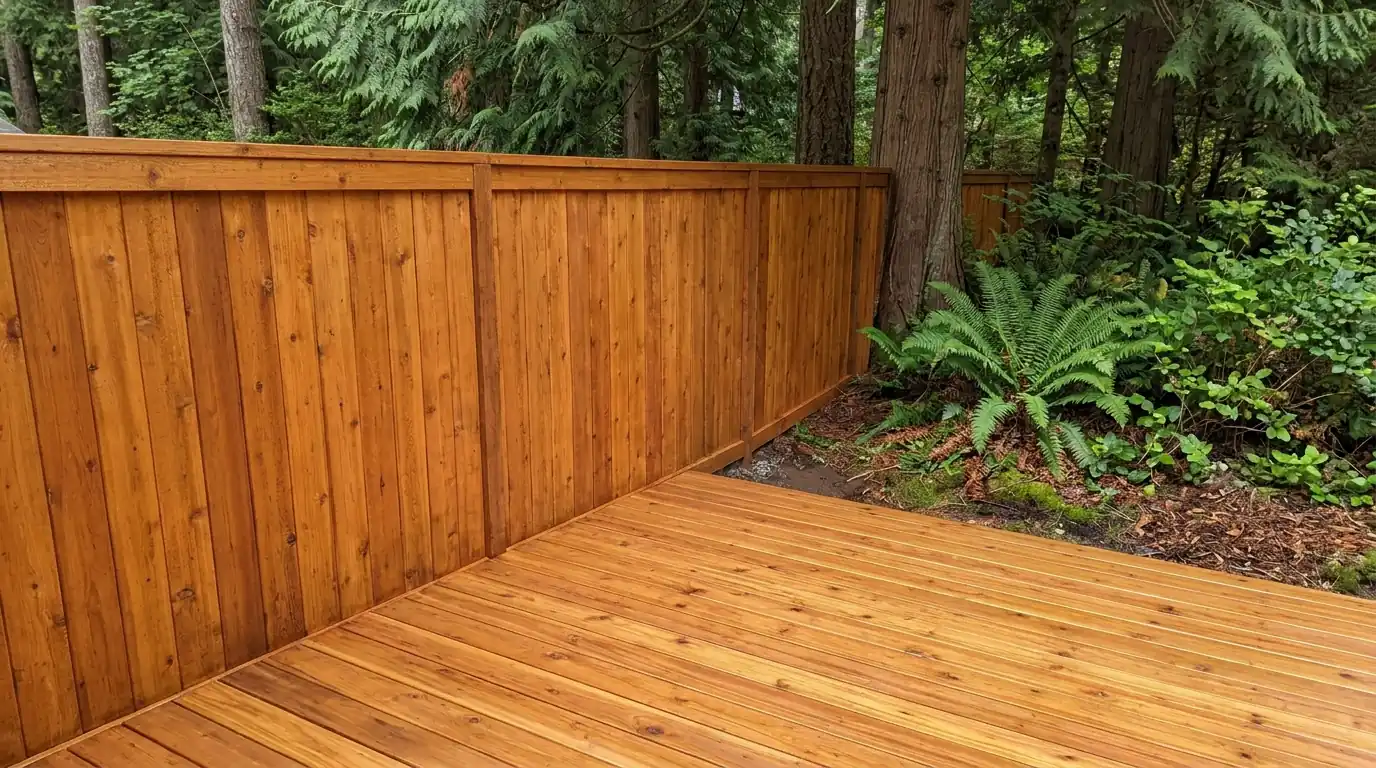
Bare cedar and pressure-treated wood in the Northwest absorb months of rain, then dry and crack in summer sun, which leads to graying, splitting, moss and eventually rot. A good penetrating stain slows water absorption and blocks UV. Around Tacoma, most decks need restaining every two to three years and most fences every three to five, depending on sun and shade.
What rain and sun do to unprotected wood
Wood moves with water. Through our wet season, roughly October to May, deck boards and fence pickets soak up moisture and swell. Then summer sun dries the surface fast while the core stays damp, and that cycle opens small checks and cracks. Ultraviolet light breaks down the wood fibers at the surface, which is why unprotected cedar turns silver gray. That gray layer is weak and holds water even longer. On shaded north sides, moss and algae move in and keep the wood wet for most of the year.
Left alone, that pattern leads to soft spots, loose fasteners and boards that cup or split. On decks it also makes the surface slick through the winter. The fix is not complicated, but timing matters. Stain soaks into the wood, slows water absorption and filters UV, so the cycle of swelling and drying is gentler. A deck or fence that is cleaned and stained on schedule can last many more years than one left to weather on its own. It also looks cared for, which matters to neighbors and future buyers.
Choosing the right stain for decks and fences
Stains come in a range from clear to solid. Clear and toner finishes show the most grain but need recoating most often, since they hold little pigment to block UV. Semi-transparent stains are the most common choice for cedar here, showing grain while adding real protection. Semi-solid and solid stains hide more of the wood and last longer on vertical surfaces, which makes them a good fit for older fences with mismatched or weathered boards. On deck floors, we usually steer toward penetrating finishes that wear away instead of peeling.
Film-forming deck coatings that sit on top of the wood can look great at first, but foot traffic and standing water tend to make them peel in patches, and patchy peeling is hard to fix without stripping the whole deck. Penetrating oil and hybrid stains fade more evenly, so the next coat goes on after a cleaning instead of a full strip. We match the product to the wood, the exposure and how the space gets used. Our deck staining and fence staining pages cover what each job involves.
- Clear or toner: most grain showing, shortest life
- Semi-transparent: visible grain plus real UV protection
- Semi-solid: hides weathering, lasts longer on fences
- Solid stain: most coverage, best for mismatched boards
- Penetrating finishes on decks wear evenly instead of peeling

Prep is where staining succeeds or fails
Stain only works if it can soak in. That means removing dirt, mildew, moss and the gray surface layer before any product goes on. We usually start with a wood cleaner and a careful wash, using low pressure on cedar so the fibers do not fur up or gouge. Older failing coatings may need a stripper. Afterward, a brightener restores the natural color of the wood and evens it out so stain absorbs uniformly. Then the wood needs to dry, typically to about 15% moisture or less, before any staining begins.
That drying step is why staining here is a summer job. After a wash in July, a deck in full sun might be ready in a day or two, while a fence along a shaded property line can take longer. We test with a meter rather than guessing. Loose boards get re-fastened, popped nails are set, and rotten boards are flagged before staining, since stain will not save wood that has already started to rot. Those small repairs take little time and help the new finish last noticeably longer.
How often to restain around Tacoma
Every deck and fence wears at its own pace, but some patterns hold. Horizontal deck boards take direct sun and standing water, so most need a fresh coat every two to three years. Vertical fences shed water better and usually go three to five years between coats. South- and west-facing exposures fade fastest, while shaded sides fight moss more than sun. A simple test helps: sprinkle water on the wood. If it beads, the finish is still working. If it soaks in and darkens quickly, it is time to plan another coat.
Staying on that schedule saves money. A maintenance coat on a deck that still has some protection mostly needs a cleaning and one coat of stain. A deck left until it is fully gray, cracked and mossy needs heavier prep, more product and often some board replacement. Around Gig Harbor, Browns Point and other spots near the water, salt air and wind can shorten the cycle a little, so we usually suggest checking those decks every spring. Many homeowners find that a quick yearly wash keeps the finish looking good longer.
Typical costs and how to plan
For a typical 300 to 450 square foot deck around Tacoma, cleaning and staining usually runs about $1,140-$2,860, depending on railings, stairs and how much prep the wood needs. Fence staining often lands at about $2.35-$4.85 per linear foot for a six-foot cedar fence, with the second side adding to that figure. These are typical ranges for planning, not quotes, and the actual price comes after a walk-through. Bundling the deck and fence into one visit usually lowers the cost of each part.
The best booking window for staining overlaps with exterior painting, from late May to mid September, so the calendar fills early. If your deck needs a wash first, it helps to plan both steps together so the wood can dry between them. Homeowners having cedar siding staining done often add the deck or fence to the same project to match tones across the property. To set up a walk-through, call (253) 478-2745. We answer 24/7, and we can usually look at your wood within a few days.
Geneva Bixby, Paint Tips Editor at Cole's Pro Painting. Geneva writes our homeowner guides from what our crews see on Tacoma and Pierce County jobs.