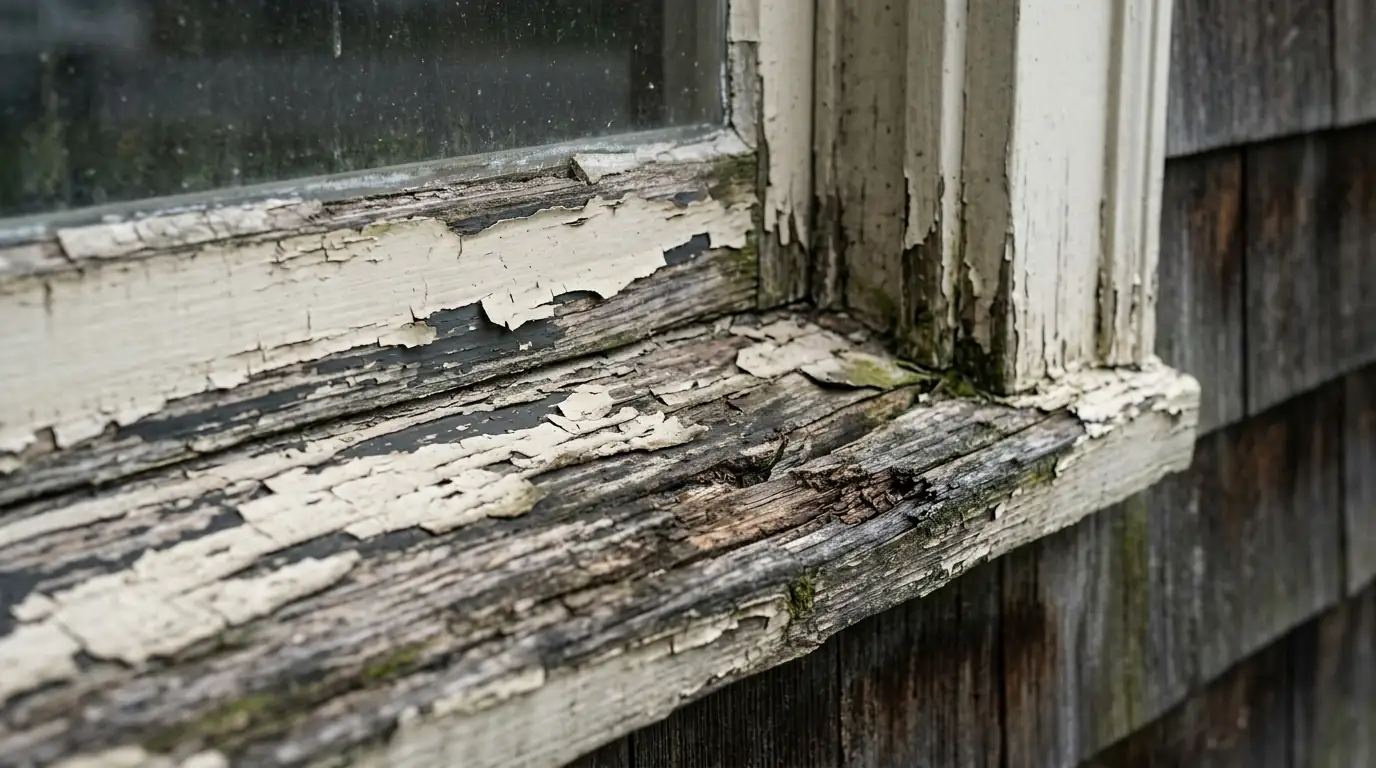
The five most common signs are peeling or blistering paint, chalky residue that rubs off on your hand, cracked or missing caulk, mildew and moss on north walls, and soft or discolored wood at sills, fascia or lower siding. Each one lets water in. Around Tacoma, catching these early often means a repaint with minor repairs instead of replacing rotted boards.
Sign one: peeling, flaking or blistering paint
Peeling is the most obvious sign and the one homeowners notice first. Paint lifts at the edges, flakes off in strips or forms bubbles that pop and leave bare wood behind. In our climate the usual cause is moisture. Water gets behind the paint from the wet season, from a bathroom or kitchen with poor venting, or from gutters that overflow onto siding. Paint applied over damp wood, or without a proper primer, also tends to fail this way. Peeling around windows and along the bottom courses of siding is especially common here.
Once paint peels, bare wood is exposed to every rainstorm from October to May. Cedar holds up for a while, but plywood siding and finger-jointed trim soak up water quickly. Small areas can usually be scraped, sanded, primed and repainted as a spot repair. When peeling covers whole walls, it usually means the old paint has lost adhesion everywhere and a full repaint with careful prep is the lasting fix. Either way, it is worth finding the moisture source first, or the new paint will fail for the same reason.
Sign two: chalking and fading
Run your hand across a sunny wall. If it comes away with a white or colored powder, the paint is chalking. Some chalking is normal as exterior paint ages, but heavy chalking means the binder that holds the paint together is breaking down under UV light. South- and west-facing walls show it first, along with a faded, washed-out color. The paint may still look intact from the street, yet it is no longer shedding water as well as it should, and it will not hold a new coat without cleaning.
Chalking by itself is not an emergency, but it tells you a repaint is coming. Painting directly over chalky siding is a common mistake, because the new coat bonds to the powder instead of the surface. We wash chalky walls thoroughly, let them dry, and may use a primer made to bind remaining chalk. Faded trim and doors follow the same pattern. If the color is gone and chalk is heavy, plan your exterior painting for the next dry season before cracking and peeling follow.
Sign three: cracked or missing caulk
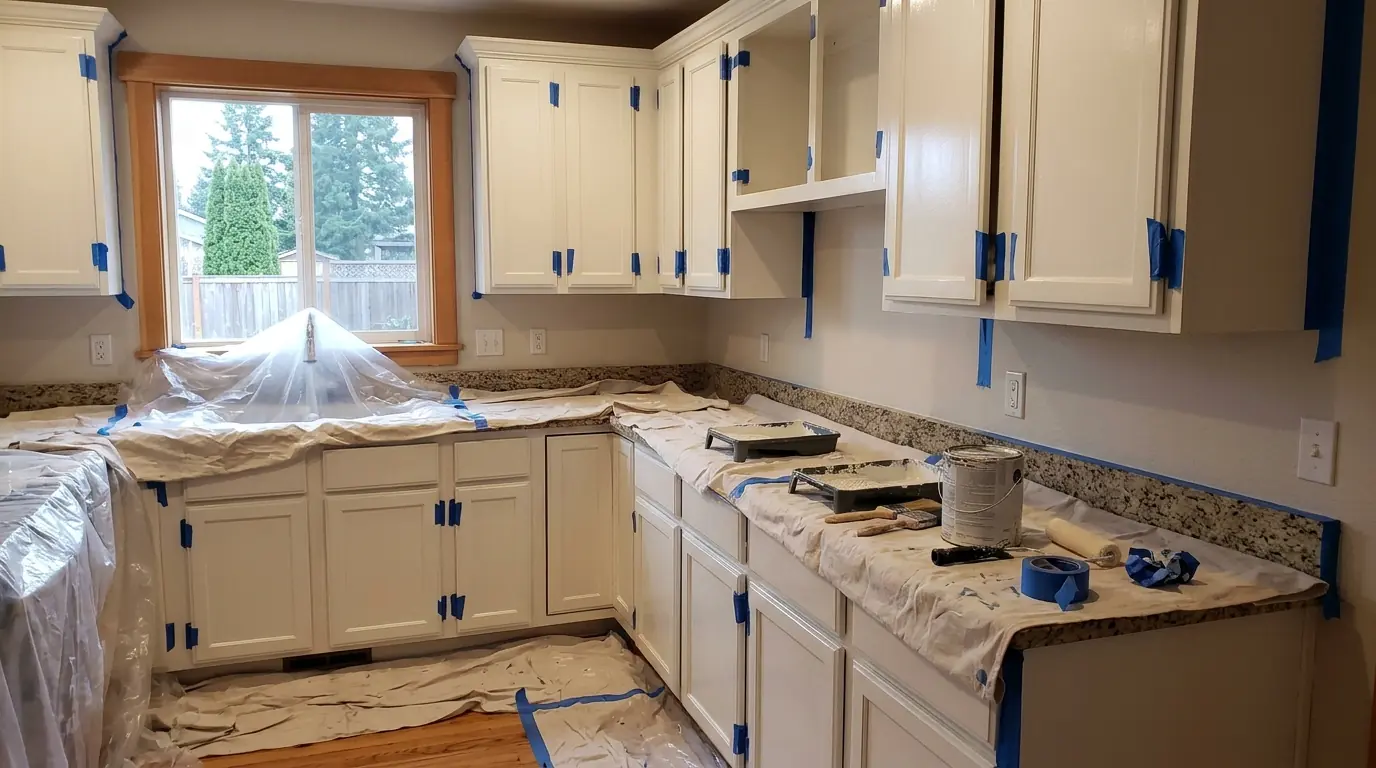
Caulk seals the joints where water would otherwise slip in: around windows and doors, at trim corners, where siding meets trim, and along butt joints in lap siding. Over time it dries out, shrinks and pulls away. Look for gaps you can slide a fingernail into, hard cracked beads, or joints where caulk is missing altogether. On fiber cement siding common on newer homes around South Hill and Bonney Lake, open butt joints are a frequent problem, and water that gets behind boards can swell the edges.
Fresh caulk is one of the cheapest ways to protect a house. During prep we cut out failed caulk, clean the joint and apply a flexible exterior sealant that can move with the wood through wet and dry months. Some joints should stay open on purpose, such as the bottom edge of lap siding, which needs to drain. Knowing which is which matters. If your paint still looks decent but caulk is failing, caulking and sealing on its own can buy several years before a full repaint is needed.
- Gaps around window and door trim
- Open butt joints in lap or fiber cement siding
- Hard, cracked beads at trim corners
- Missing caulk where siding meets trim boards
Sign four: mildew, moss and algae
Green or black streaks on siding, especially on north faces, under eaves and behind shrubs, are a sign that the surface stays damp much of the year. In the Tacoma area mildew and moss are almost guaranteed on shaded walls, and they do more than look bad. Growth holds water against the paint, breaks down the film and keeps wood moist long into the dry season. On cedar shingles and siding, moss can work into the grain and lift fibers. Painting over growth without killing it means it often comes back through the new coat.
The fix starts with cleaning. A soft wash with a mildew treatment kills growth at the root, and a gentle rinse removes it without damaging wood. We let the siding dry back down, checking that it reads about 15% moisture or less, before priming. Trimming shrubs back from walls and cleaning gutters both help keep growth from returning. Homes near Point Defiance Park and other wooded areas see heavy growth, and a simple wash every couple of years keeps paint lasting longer between full repaints.
Sign five: soft wood and early rot
This is the sign that matters most, because it means water has already won. Press a screwdriver gently into window sills, the bottom of door trim, fascia boards and the lowest rows of siding. If the tip sinks in easily or the wood feels spongy, rot has started. Dark staining, swelling, and paint that bulges over the wood are other clues. T1-11 plywood siding on 1970s and 1980s homes often rots along its lower edge, and older Craftsman homes in North Tacoma show it at sills and porch trim.
Early rot can often be cut out and replaced with new wood before it spreads. Waiting usually means larger sections, and sometimes framing, have to be replaced. Our wood rot repair work replaces damaged boards, primes all sides of the new wood and blends it into the existing siding before paint. On homes built before 1978, scraping old paint uses lead-safe methods. If you spot any of these five signs, call (253) 478-2745. We answer 24/7, and a walk-through will tell you how much work the house needs.
Geneva Bixby, Paint Tips Editor at Cole's Pro Painting. Geneva writes our homeowner guides from what our crews see on Tacoma and Pierce County jobs.