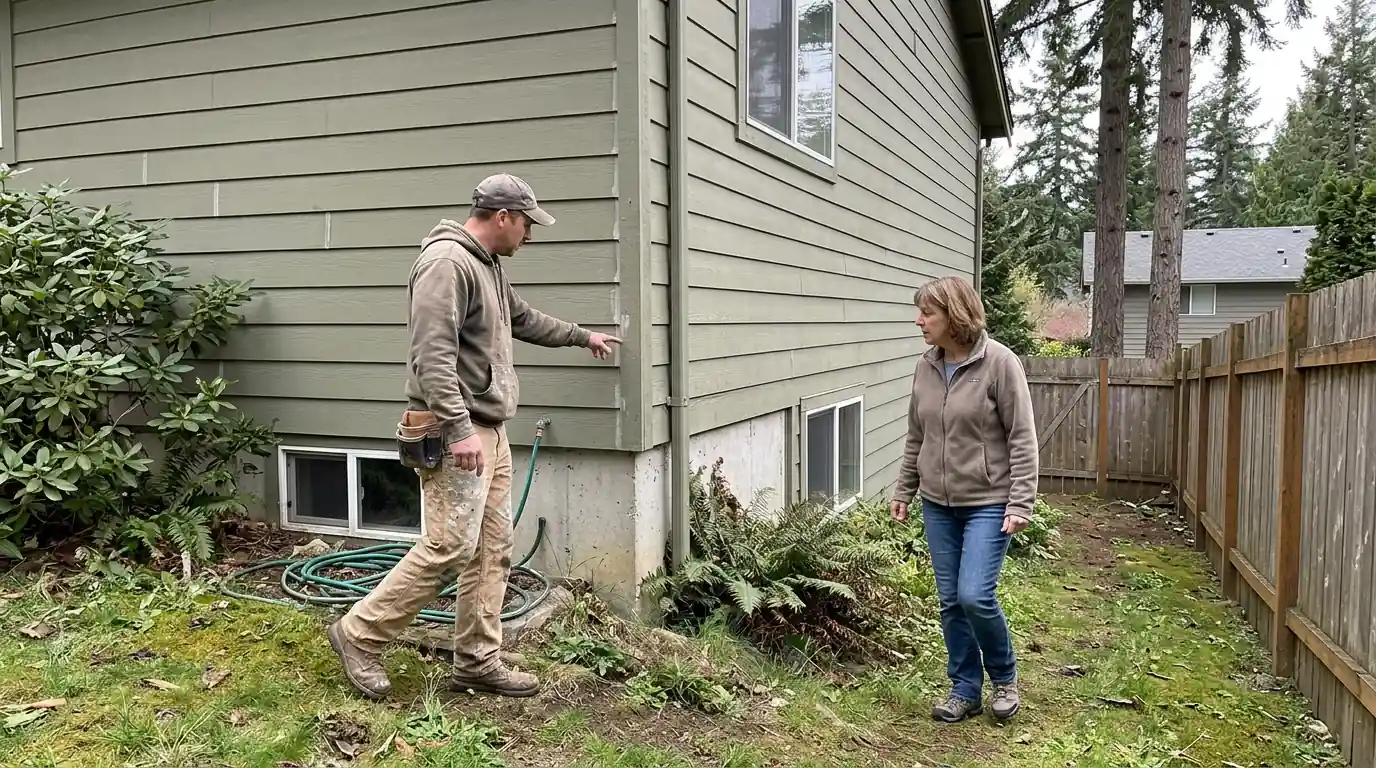
A reliable painter walks the house with you, explains the prep in detail, and puts everything in writing: surfaces, products, number of coats, repairs, start date and price. They answer questions plainly, show photos of past work on similar homes, and keep the job clean. Compare written scopes rather than totals, and be wary of prices far below the rest with little detail.
Start with the walk-through
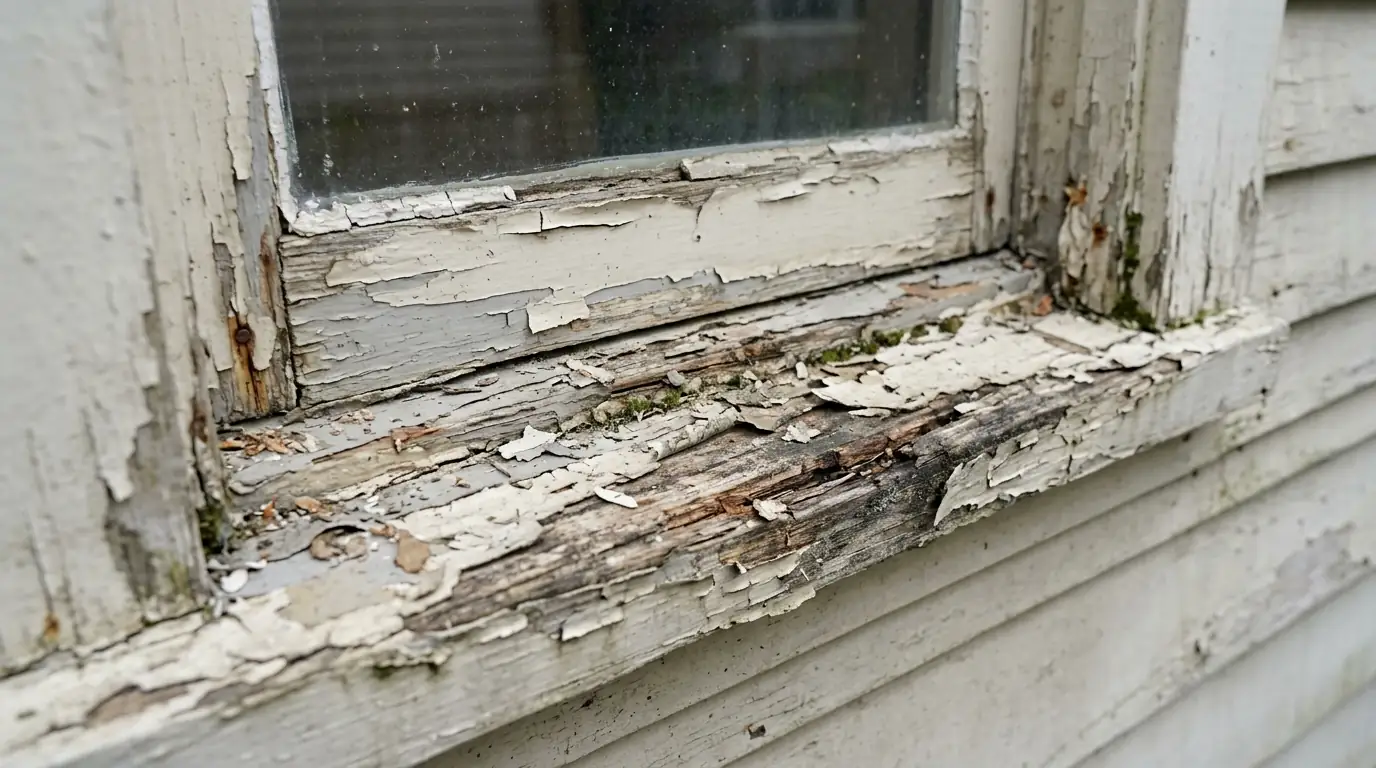
The walk-through tells you a lot about how a painter works. A careful contractor looks closely at the house before naming a price. Outside, that means checking siding type, peeling areas, caulk joints, rot at sills and fascia, and how high the walls go. Inside, it means looking at wall condition, ceiling height, trim and how much furniture needs moving. They ask what bothers you about the current paint and how you use each room. A price given from the driveway without that attention is a guess, not a plan.
South Hill has a wide mix of homes, from 1980s split-levels with T1-11 siding to newer builds with fiber cement, and each needs different prep. A good painter talks about that difference without being asked. They should explain how they will wash, scrape, repair, caulk and prime, and why. If you hear vague phrases with no detail about prep, ask follow-up questions. The quality of the answers is often a better guide than the price itself, since prep decides how long paint lasts.
What a good written price includes
Before any work starts, you should have a written price that spells out the job. It should list each surface being painted, the products and sheens, the number of coats, the prep steps, and any repairs such as rot replacement. It should say what is excluded, how colors will be confirmed, and roughly when work will start and how long it will take. Payment terms belong in writing too. With all of that on paper, comparing two painters becomes simple, because you can see what each price actually covers.
Be careful when comparing totals alone. One price may include two finish coats on body and trim while another includes one. One may include replacing soft fascia while another treats it as an extra after work starts. A gap of several thousand dollars between bids often comes down to exactly these differences. On a typical South Hill two-story exterior, prices commonly land around $6,840-$11,450, though that is a typical range, not a quote. If a bid is far below that with little detail, ask what was left out.
- Every surface listed: body, trim, doors, gutters, fascia
- Products, sheens and number of coats
- Prep steps: washing, scraping, caulking, priming
- Repairs priced as separate lines
- Start window, expected length and payment terms
Questions worth asking every painter
A few direct questions make the differences between painters clear. Ask how they handle wet weather and how they decide when siding is dry enough to paint. Ask what they do if they find rot partway through. Ask how they protect floors, plants, windows and cars, and how they clean up each day. For homes built before 1978, ask how they handle older paint that may contain lead. For interiors, ask how they handle furniture and patches. Clear, specific answers are a good sign that the process behind them is real.
Ask who you will talk to during the job and how changes will be handled. Good communication keeps small surprises from becoming disputes. Ask to see photos of past work on homes like yours, ideally with the same siding or cabinet type, and ask how the finish has held up over time. Ask about touch-ups after the job and how to reach them. A painter who answers the phone, explains things patiently and puts promises in writing is usually the same one who shows up when they say they will.
Red flags to watch for
Some warning signs show up early. A large cash deposit demanded before any schedule is set, a price that changes once you ask for it in writing, or pressure to sign today to get a discount are all reasons to slow down. So is a painter who wants to start an exterior during a rainy week in March without talking about moisture. Another flag is a scope that never mentions prep. Paint that goes over dirty, damp or peeling surfaces fails early, no matter how good the product is.
Watch how they treat your property during the visit, too. Do they walk carefully around plants, ask before going into the backyard, and listen when you describe problem areas? Small habits during a walk-through usually match what happens during the job. Be cautious with anyone who cannot explain the difference between products, or who insists one approach fits every home. A good painter tailors the plan to your house. For South Hill homeowners, that often means a careful look at siding painting needs for the specific material on the walls.
How we approach work in South Hill
Our crews have painted around Puyallup for more than 15 years, and South Hill is close to home for us. When you call, we set a time to walk the house with you, check moisture on the siding, point out any rot, and talk about colors and timing. Within a day or two you get a written price with every line clear. During the job, we keep the site tidy, protect plants and walkways, and tell you each morning what the day holds. When we finish, we walk the house again with you.
Our South Hill page covers the homes and conditions we see most in the area, and our exterior painting page explains how a full repaint runs from wash to final walk. Questions are always welcome, even before you are ready to book or have settled on colors. To set up a walk-through, call (253) 478-2745. We answer 24/7, so you can call whenever it suits you, including evenings and weekends. Whoever you hire, ask questions and get it all in writing.
Geneva Bixby, Paint Tips Editor at Cole's Pro Painting. Geneva writes our homeowner guides from what our crews see on Tacoma and Pierce County jobs.