Skip to content
CPCole's Pro PaintingHouse painters, Tacoma and Pierce County Line open 24/7(253) 478-2745
Exterior painting, Tacoma

Stucco and masonry painting in Tacoma, breathable and crack-sealed

Stucco and masonry are tough materials, but they are porous, and in western Washington that means they take in water.

  • 24/7Phone answered
  • $3.20-$6.85Typical, per sq ft
  • 66Areas we paint
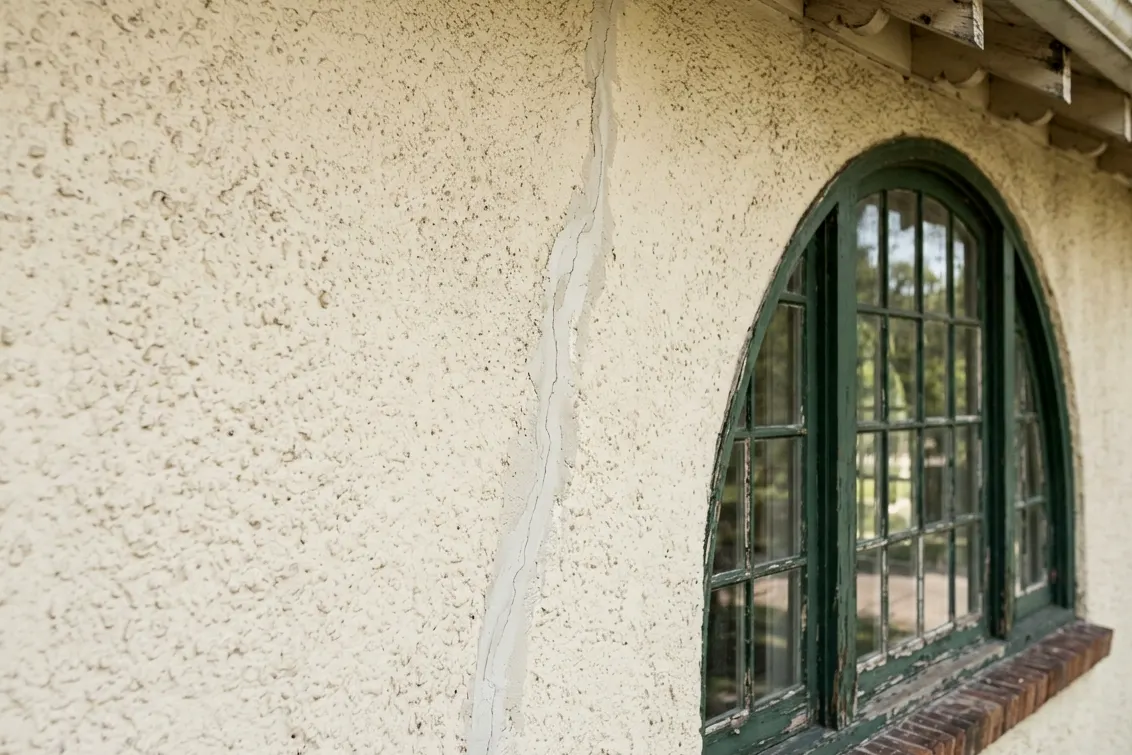
Cream painted stucco wall with a freshly patched hairline crack next to an arched window on a 1920s revival home near Wright Park
Quick answer

Stucco and masonry painting in Tacoma covers stucco walls, concrete block, brick and chimneys. We wash off moss and efflorescence, patch cracks with flexible masonry filler, apply a masonry primer, and finish with a breathable acrylic or elastomeric coating. Typical pricing is $3.20-$6.85 per sq ft, set after a walk-through. Heavy crack repair or elastomeric systems cost more.

Stucco and masonry are tough materials, but they are porous, and in western Washington that means they take in water. Rain gets into hairline cracks, moss roots into the surface on shaded walls, and white mineral salts called efflorescence push out through the face as the wall dries. Paint on masonry has to stop liquid water from getting in while still letting water vapor escape. Get that balance wrong and the coating bubbles, peels or traps moisture against the wall.

We paint stucco homes, concrete block foundations and garages, painted brick, and chimneys across the Tacoma area. Every job starts with finding and repairing cracks, since a coating is only as good as the surface under it. We will also tell you plainly if a wall should not be painted at all, which is sometimes the right answer for old, unpainted brick. Call (253) 478-2745 and we'll look at the walls with you.
When to call

Signs it is time for stucco & masonry painting

Hairline cracks across stucco walls

Small cracks let rain in, and water behind stucco can damage the wall structure over time.

White powdery stains on brick or block

Efflorescence means water is moving through the masonry and carrying salts to the surface.

Green moss on north-side stucco

Moss holds water against the surface and its roots slowly break down the finish.

Peeling or bubbling paint on masonry

Non-breathable paint on masonry traps moisture, which pushes the coating off in bubbles and flakes.

Faded or blotchy painted stucco

Sun-faded and patched areas make a stucco house look uneven and older than it is.

Chimney paint flaking near the roofline

Chimneys take weather from all sides and often show paint failure first.

Why does masonry paint need to breathe in a wet climate?

Stucco, brick and concrete block all absorb some water. In the Tacoma wet season, walls take on moisture from rain, and that moisture has to escape as vapor when the weather dries. A breathable coating lets vapor pass through while shedding liquid water. If the paint is too tight, like an oil-based enamel or the wrong sealer, the vapor gets trapped under it. That trapped moisture is what causes bubbling, peeling and, over time, damage to the masonry itself.

We choose coatings based on the wall and its exposure. Quality 100% acrylic masonry paints are breathable and work well on most stucco and block in our climate. Elastomeric coatings are much thicker and flexible, so they bridge hairline cracks and stretch as the wall moves. They are great on cracked stucco, but they are less breathable, so we only use them on walls that are dry and drain well. For painted brick, we use a breathable masonry paint. Old unpainted brick is often best left unpainted, and we will tell you so.

How we repair cracks and efflorescence before painting

Most stucco cracks are hairline cracks from settling and seasonal movement. We clean them out and fill them with a flexible, paintable masonry patch so they can move a little without reopening. Wider cracks may need to be cut open slightly and filled in layers. Where stucco has chipped or broken away, we patch with a stucco repair mix and texture it to blend with the wall. Patches need to cure before priming, since fresh cement products are very alkaline and can ruin paint applied too soon.

Efflorescence is a sign of water moving through the wall. We clean it off with a stiff brush and a masonry cleaner, but we also look for its source, which is often a leaking gutter, a missing downspout extension or soil piled against the wall. If the water problem is not fixed, the salts will keep coming back and push the new paint off. Once the wall is clean and dry, we apply an alkali-resistant masonry primer over patches and bare areas before the finish coats. Our caulking and sealing work covers joints where stucco meets trim and windows.

Stucco, block and brick across Tacoma's older and newer homes

Stucco is less common in Tacoma than in drier places, but you see it on many 1920s Spanish and Tudor revival homes in North Tacoma and around Wright Park, on some mid-century homes, and on newer homes and townhouses in places like Gig Harbor and University Place. Older stucco often has layers of past paint and patches in slightly different textures. Concrete block shows up on foundations, garages, retaining walls and small commercial buildings throughout South Tacoma and Fife.

Brick chimneys and brick-faced homes are common in older parts of Tacoma, including the Stadium District and Old Town. Many were painted decades ago, and the paint is now peeling. Removing old paint from brick is possible but can be costly and hard on soft brick. Usually the better choice is to clean, repair and repaint with a breathable masonry paint. Homes built before 1978 may have lead paint on masonry too, so scraping uses lead-safe methods. For the wood parts of the house, our exterior painting service covers the rest.

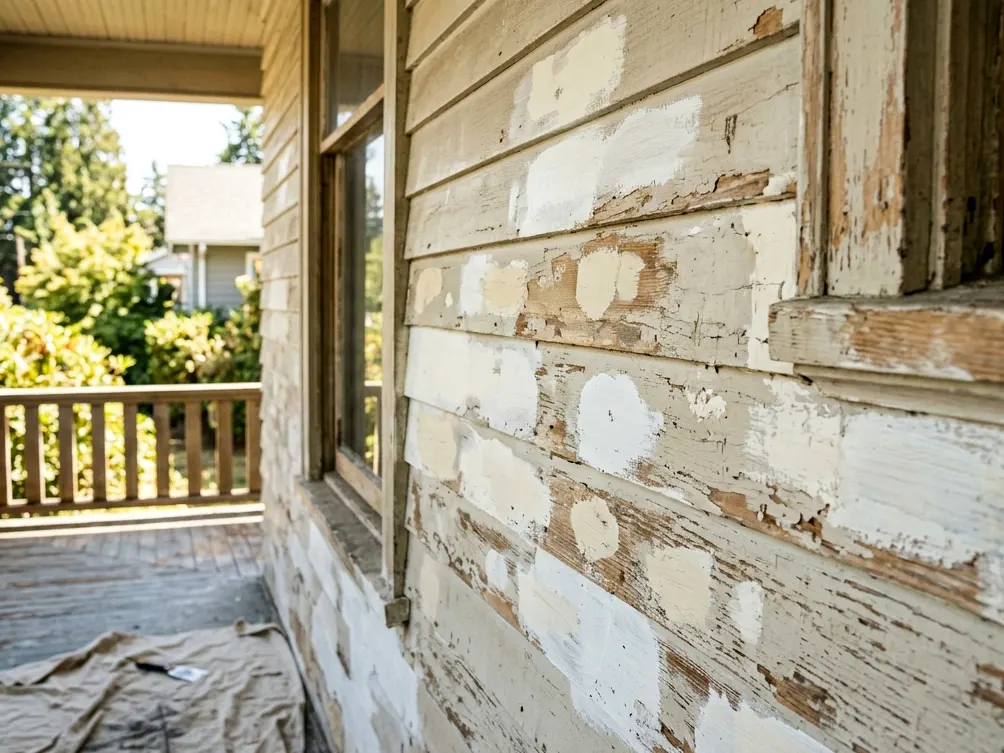
Scraped and spot-primed lap siding on a North Tacoma porch before the finish coat goes on
Prep sets the finish: most of a paint day goes into the work before color goes on.
What is included

What our stucco & masonry painting covers

  • Soft washing to remove moss, mildew, dirt and loose chalk
  • Treating efflorescence and checking for its water source
  • Crack repair with flexible, paintable masonry patching compound
  • Patching chips and spalled areas to match existing stucco texture
  • Alkali-resistant masonry primer on new patches and bare surfaces
  • Breathable acrylic or elastomeric finish coats chosen for the wall
  • Masking of windows, doors, trim, lights and nearby surfaces
  • Clear advice on brick that should stay unpainted
Job days

How a stucco & masonry painting job runs

Typical order of work on a Tacoma-area project. Weather can shift exterior days.

  1. D1

    Inspect the walls together

    We look for cracks, efflorescence, moss and old paint failure, and talk about the right coating. You get a price and a clear plan before any work starts.

  2. D2

    Protect the area

    Windows, doors, plants and walkways get covered, and nearby surfaces are masked. We set up ladders or staging for high walls and chimneys.

  3. D3

    Clean the masonry

    We soft wash to remove moss, mildew and dirt, then treat efflorescence. The wall must dry fully before repairs begin.

  4. D4

    Repair cracks and damage

    Cracks get flexible patching compound, and chips or spalled areas get stucco repair mix textured to match. Patches cure before priming.

  5. D5

    Prime and coat

    We apply an alkali-resistant masonry primer, then two finish coats of breathable acrylic or elastomeric coating. Each coat goes on in dry weather.

  6. D6

    Final check

    We walk the walls with you and touch up any thin spots. You get tips on keeping water away from the masonry going forward.

Cost

What moves the price of stucco & masonry painting

Typical range $3.20-$6.85 per sq ft. These are the things that push a job toward either end.

  1. Number and size of cracks, chips and damaged areas that need repair.
  2. Coating type, since elastomeric systems use more material than standard acrylic.
  3. Wall height and access, including chimneys and second-story stucco.
  4. Efflorescence treatment and any fixes to the water source.
  5. Texture matching on patches for heavily textured or old stucco.
  6. Lead-safe prep on painted masonry in homes built before 1978.
Local

Stucco & Masonry Painting around Tacoma and Pierce County

Masonry work around Tacoma is tied to the age and style of each neighborhood. In North Tacoma and around Wright Park, 1920s revival homes with stucco walls and tile accents often carry many layers of paint and old patches. The Stadium District and Old Town have brick chimneys and brick-faced homes where painted brick is now peeling. Concrete block foundations and garages show up widely in South Tacoma and Fife. Newer stucco homes and townhouses in Gig Harbor face wind-driven rain off the water, so crack sealing and breathable coatings matter even more there. Moss and efflorescence on shaded walls are the most common problems we fix before painting anywhere in the region.

Where we do the most stucco & masonry painting

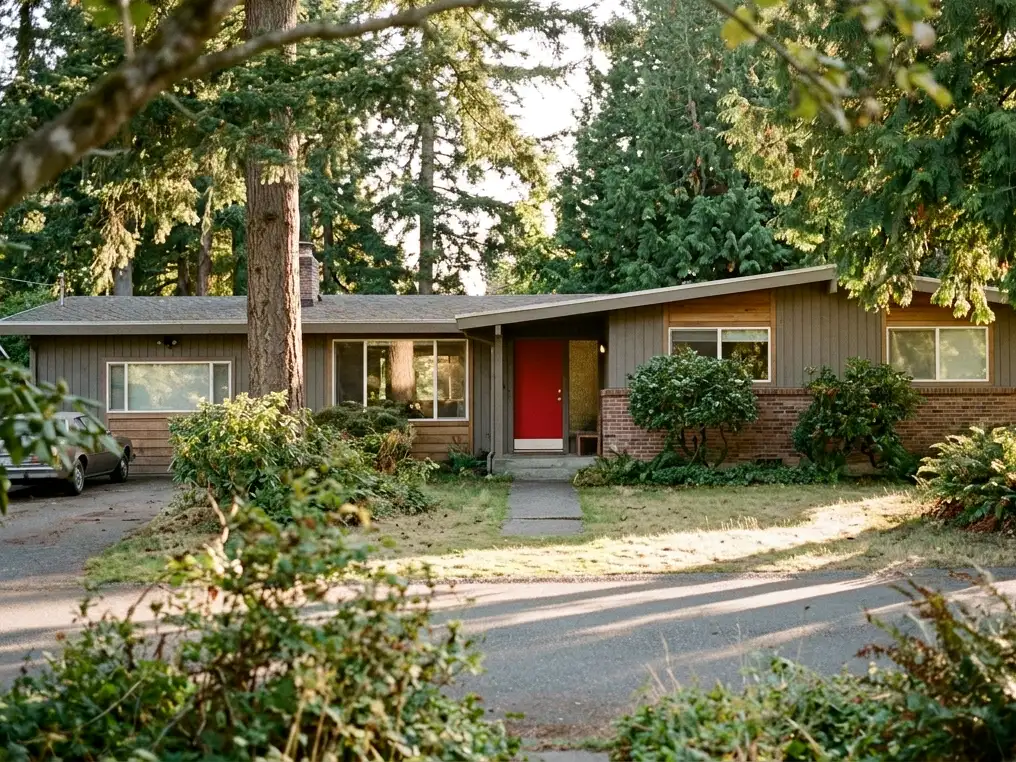
Mid-century rambler in Pierce County repainted in warm gray with a bold red front door
FAQ

Stucco & Masonry Painting questions from Tacoma homeowners

Should I paint my brick house or leave it natural?

Unpainted brick in good condition usually lasts longest left alone, since it breathes and sheds water naturally. Painting it means you will need to repaint in the future. If the brick is already painted and peeling, repainting with a breathable masonry paint is usually the best fix. If you want a new look on unpainted brick, a breathable limewash or mineral paint is often a better choice than regular paint. We will talk through the options honestly.

What is elastomeric paint, and is it right for my stucco?

Elastomeric coating is a very thick, rubbery paint that stretches as the wall moves, so it bridges hairline cracks and keeps rain out. It works well on stucco with lots of small cracks. The tradeoff is that it breathes less than standard acrylic masonry paint, so it is best on walls that stay fairly dry and drain well. On older stucco with moisture issues, we often choose a breathable acrylic instead.

Why does white powder keep showing up on my block wall?

That white powder is efflorescence, mineral salts carried out of the masonry by water as it dries. It means water is getting into the wall, often from soil against it, poor drainage, a leaking gutter, or water coming from behind a retaining wall. Painting over it without fixing the water source usually fails because the salts push the paint off. We clean the salts, look for the cause, and talk with you about fixing it before painting.

Can you paint a concrete block foundation or garage?

Yes. Concrete block takes masonry paint well once it is clean and dry. We wash it, treat any efflorescence, fill cracks and holes, and use a block filler or masonry primer to smooth the rough surface. Then two coats of breathable masonry paint go on. Foundations that sit in damp soil or below grade can have ongoing moisture, so we check for that first and recommend the right coating.

How long does stucco paint need before rain hits it?

Most masonry paints need several dry hours after application before rain, and they cure fully over days to weeks depending on temperature and humidity. In Tacoma, we schedule stucco work for the dry months and watch the forecast closely. Fresh stucco patches also need time to cure before primer, often a few days or more depending on the product. Rushing these steps is a common reason masonry paint fails early.

Talk to us about stucco & masonry painting

Call and tell us what you are painting. We answer 24/7 and set up a walk-through at a time that suits you.

Answered 24/7(253) 478-2745