Skip to content
CPCole's Pro PaintingHouse painters, Tacoma and Pierce County Line open 24/7(253) 478-2745
Wood & Stain painting, Tacoma

Fence staining in Tacoma that keeps cedar boards from graying

Cedar privacy fences are standard in almost every Tacoma-area neighborhood, from the backyards of Lakewood and University Place to new subdivisions in South Hill and Bonney Lake.

  • 24/7Phone answered
  • $4.15-$9.20Typical, per linear foot
  • 66Areas we paint
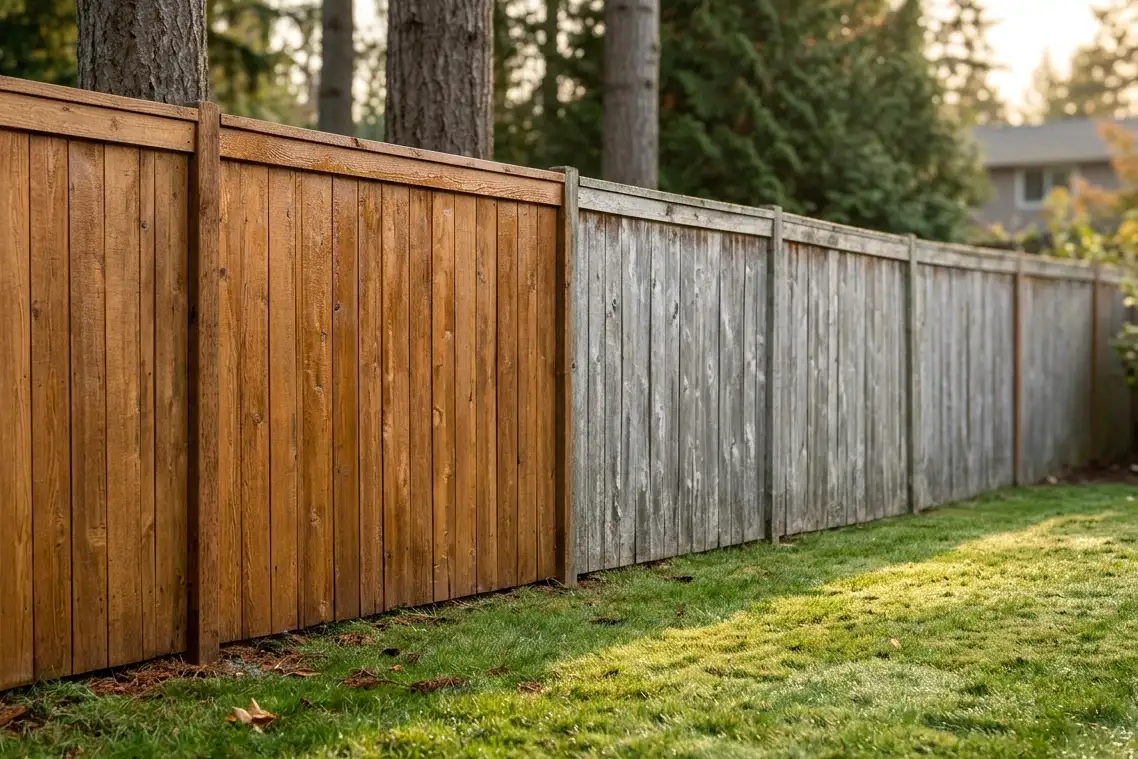
Six-foot cedar privacy fence half stained in warm natural brown beside a weathered gray section in a University Place backyard, damp lawn in front
Quick answer

Fence staining in Tacoma involves cleaning mildew and gray fibers off the boards, brightening the wood, letting it dry, then spraying and back-brushing a penetrating stain on one or both sides. A typical 6-foot cedar privacy fence runs $4.15-$9.20 per linear foot after a walk-through, depending on height, sides stained, condition and how close plants sit.

Cedar privacy fences are standard in almost every Tacoma-area neighborhood, from the backyards of Lakewood and University Place to new subdivisions in South Hill and Bonney Lake. A new fence looks warm and rich for one summer, then the rain and UV go to work. Within a couple of years most fences turn silver, then pick up green algae and black mildew on the shaded sides, and the bottom boards near wet soil start to soften.

Staining slows all of that down. A penetrating stain puts pigment and water repellent into the wood, so boards shed rain, dry faster and keep their color. We clean and brighten first, wait for dry readings, then spray and back-brush so stain gets into the rough-sawn surface. If you have a deck nearby, our deck staining work can use the same color so the backyard looks finished. Call (253) 478-2745 and we'll walk the fence line with you.
When to call

Signs it is time for fence staining

Silver gray boards

A fence that has gone fully gray has lost its surface fibers to the sun, and the wood is now exposed to every rain.

Green or black growth

Algae and mildew on the shady side hold moisture against the boards and speed up decay along the bottom rail.

Boards cupping or twisting

Pickets that warp out of line are drying and swelling unevenly because nothing is slowing water absorption.

Soft spots near the ground

Bottom edges in contact with soil or bark stay wet and start to rot first, so they need attention before staining.

Uneven color after repairs

New replacement boards stand out against weathered ones, and a stain coat blends the fence back together.

Old stain worn in patches

Faded stripes where sprinklers or sun hit hardest show the last coat has reached the end of its life.

Should both sides of a Tacoma fence be stained?

Staining both sides gives the fence the most even protection. Wood that is sealed on one face and bare on the other dries and swells unevenly, which can make boards cup and twist over time. It also leaves the neighbor's side to weather and grow mildew, which eventually works through the board. When we can, we recommend coating both faces, and many neighbors are happy to share the cost once they see the plan and the color.

When the back side is not accessible, or a neighbor prefers to leave their side alone, staining just your side still helps a great deal. We take extra care along the top edge and the board ends, where water gets in first. Shared fence lines in older Tacoma neighborhoods sometimes run through dense shrubs or along steep slopes, so we check access during the walk-through and adjust the plan rather than promising coverage we cannot deliver.

How do you stain a fence without hitting plants and cars?

Spraying is the fastest way to get stain into rough-sawn cedar, but it needs real control. We cover nearby beds with plastic, wet down plants so any drift rinses off, and set up shields made of cardboard or plastic sheeting along the base when we work near siding, cars and patios. We watch the wind and pause when it picks up, because a light breeze on a Tacoma afternoon can carry mist farther than people expect.

After spraying a section, we back-brush it right away. That pushes stain deeper into the grain, evens out heavy spots, and catches the drips that form on picket edges. In tight spots along garden beds or next to a neighbor's garage, we skip the sprayer and brush or pad the boards by hand. It takes longer, but it keeps stain off places it should not be, and on fences next to exterior house painting work we often coordinate both.

Which fence stain colors hold up best in western Washington?

Color matters for more than looks. Clear and very light stains carry little pigment, so they let more UV reach the wood and fade quickly. Mid-tone cedar, redwood and warm brown stains hold up better because the pigment protects the surface. Darker browns and grays last longest of all, though they also show dust and pollen more on a sunny fence. For most Tacoma backyards, a medium natural tone is a good balance between protection and the classic cedar look.

Solid stains in grays, charcoals and deep greens are popular on newer fences around Puyallup and South Hill, where the style is more modern. Solid stain hides mismatched boards and lasts longer between coats, but it covers the grain. We bring samples and test them on your actual boards, since cedar's own color shifts every stain a little. The color you see on the sample card is rarely what you get on old weathered fence wood.

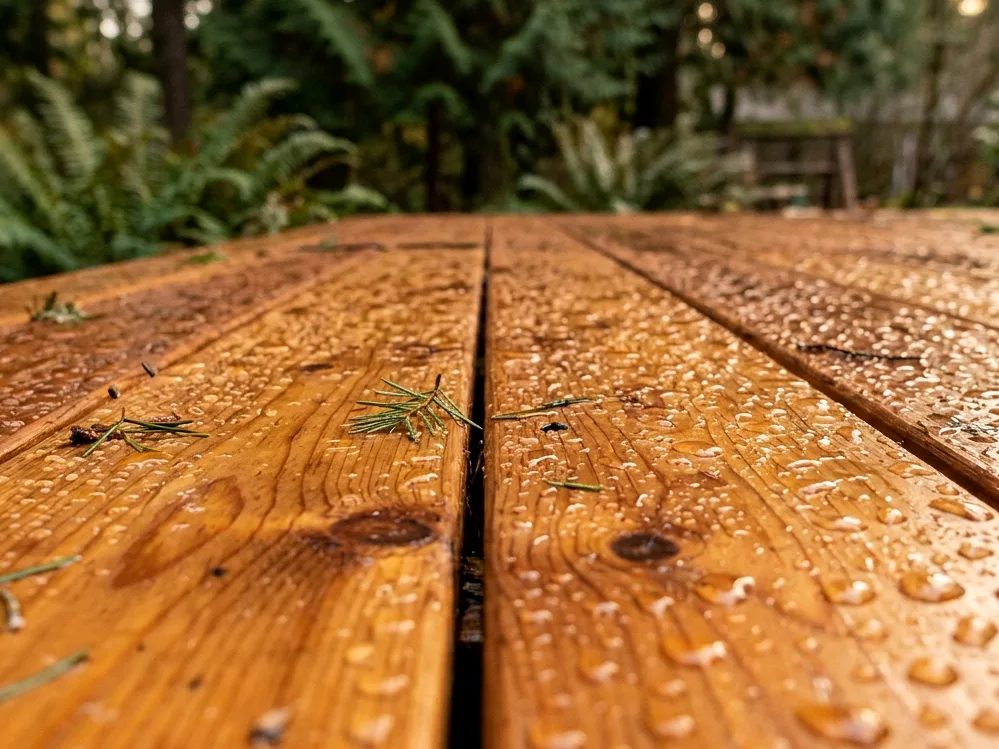
Water beading on a newly sealed deck surface after a light Northwest rain
Prep sets the finish: most of a paint day goes into the work before color goes on.
What is included

What our fence staining covers

  • Walk of the full fence line to check posts, rails and boards
  • Trimming back of light vegetation touching the fence where permitted
  • Low-pressure cleaning with a wood cleaner to remove mildew and gray fibers
  • Brightener to restore cedar color and neutralize the cleaning solution
  • Plastic and drop cloths to shield plants, siding, cars and hardscape
  • Spray application of penetrating stain with back-brushing into the grain
  • Gates, top caps, trim boards and rails coated along with pickets
  • Final check for misses and drips, then masking removal and cleanup
Job days

How a fence staining job runs

Typical order of work on a Tacoma-area project. Weather can shift exterior days.

  1. D1

    Walk the fence line

    We measure the fence, look at both sides, and check for loose boards or posts. You get a range and a plan for sides, color and timing.

  2. D2

    Prep the area

    Plants are wet down and covered, nearby surfaces are shielded, and light vegetation is pulled back. Gates and hardware are masked as needed.

  3. D3

    Clean the boards

    A wood cleaner and low-pressure rinse lift mildew, algae and gray fibers. We keep pressure low so the cedar does not fur or splinter.

  4. D4

    Brighten and dry

    A brightener restores color and balances the wood. We wait until meter readings show the boards are dry enough to stain.

  5. D5

    Spray and back-brush

    Stain is sprayed on in manageable sections and brushed in right away. Tops, ends and the bottom edge get extra attention.

  6. D6

    Inspect and clean up

    We check each section for misses and drips. Coverings come off, and we leave the yard as tidy as we found it.

Cost

What moves the price of fence staining

Typical range $4.15-$9.20 per linear foot. These are the things that push a job toward either end.

  1. Fence height and style, such as shadow box, lattice top or horizontal boards.
  2. One side or both sides stained, and the access along each side.
  3. How weathered the boards are and how much mildew needs cleaning.
  4. Semi-transparent or solid stain, and whether a second coat is needed.
  5. Plants, shrubs and structures close to the fence that need extra protection.
  6. Gates, arbors and decorative posts included in the job.
Local

Fence Staining around Tacoma and Pierce County

Fences are part of nearly every lot in Pierce County, and the conditions change across short distances. In Lakewood and University Place, older fences often sit under tall Douglas firs that keep them damp and drop needles along the top rail. Newer subdivisions in South Hill and Bonney Lake have long runs of cedar privacy fence along shared lot lines, sometimes the same age on every house on the street. In Fircrest and the West Slope, fences tend to be shorter with more gates and trim details. Since stain needs dry wood and a few dry hours after application, our fence season runs mostly late May through mid September.

Where we do the most fence staining

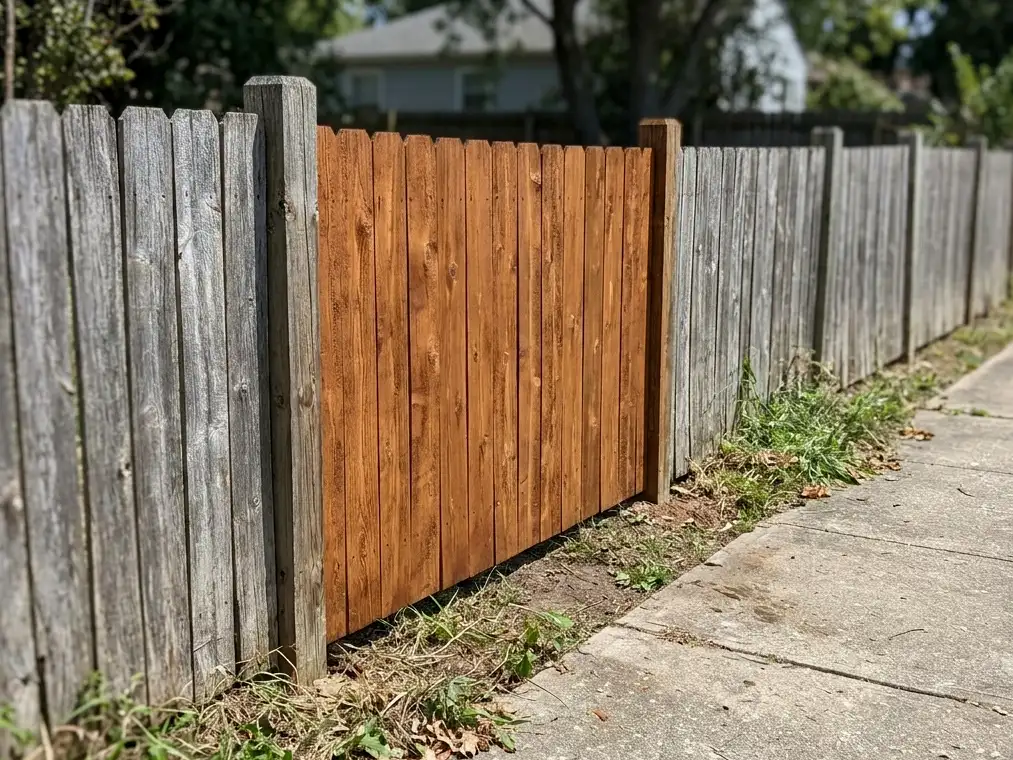
Cedar fence along a sidewalk with one stained section next to weathered gray boards
FAQ

Fence Staining questions from Tacoma homeowners

How soon can a new cedar fence be stained?

Rough-sawn cedar can often be stained within a few weeks once it is dry. Smooth boards sometimes have mill glaze that blocks stain, so they may need a cleaner or a short weathering period first. Pressure-treated posts and rails can take longer to dry out. We test moisture before staining, and staining in the first season prevents the boards from graying and starting to grow mildew.

Will stain fix a fence that is already leaning?

No. Stain protects wood, but it cannot fix a post that has rotted at the ground or a footing that has shifted. We will point out leaning sections, rotted posts and broken rails during the walk-through so you can have them repaired first. Staining over a failing post only protects boards that may need to come off. Once the structure is solid, the stain helps the new parts last.

How often should a Tacoma fence be restained?

Semi-transparent stains on a sunny fence usually need a fresh coat after a few years, while shaded sections last longer. Solid stains last longer between coats. A good test is splashing water on the boards. If it beads, the stain is still working. If it soaks in and darkens the wood, it is time. Restaining before the fence turns gray again is much less work.

Can you stain a fence that was painted before?

Penetrating stain will not soak through paint. On a painted fence, the options are repainting with an exterior paint over well-prepped sound paint, coating with a solid stain made for previously painted surfaces, or stripping to bare wood. Stripping a whole fence takes a lot of labor. We test the existing coating and usually recommend the simplest option that will hold up through our winters.

Do I need to be home while you stain the fence?

Not for most of it. We need gate access, a working outside water spigot and any pets kept inside on the days we work. It helps if cars are moved off the driveway near the fence line and outdoor furniture is pulled back. We stay in touch by phone through the job, and you can reach us at (253) 478-2745 any hour if something comes up.

Talk to us about fence staining

Call and tell us what you are painting. We answer 24/7 and set up a walk-through at a time that suits you.

Answered 24/7(253) 478-2745