Skip to content
CPCole's Pro PaintingHouse painters, Tacoma and Pierce County Line open 24/7(253) 478-2745
Interior painting, Tacoma

Door painting in Tacoma for interior doors and front entry doors

Doors get handled more than any other painted surface in a house.

  • 24/7Phone answered
  • $148-$286Typical, per interior door
  • 66Areas we paint
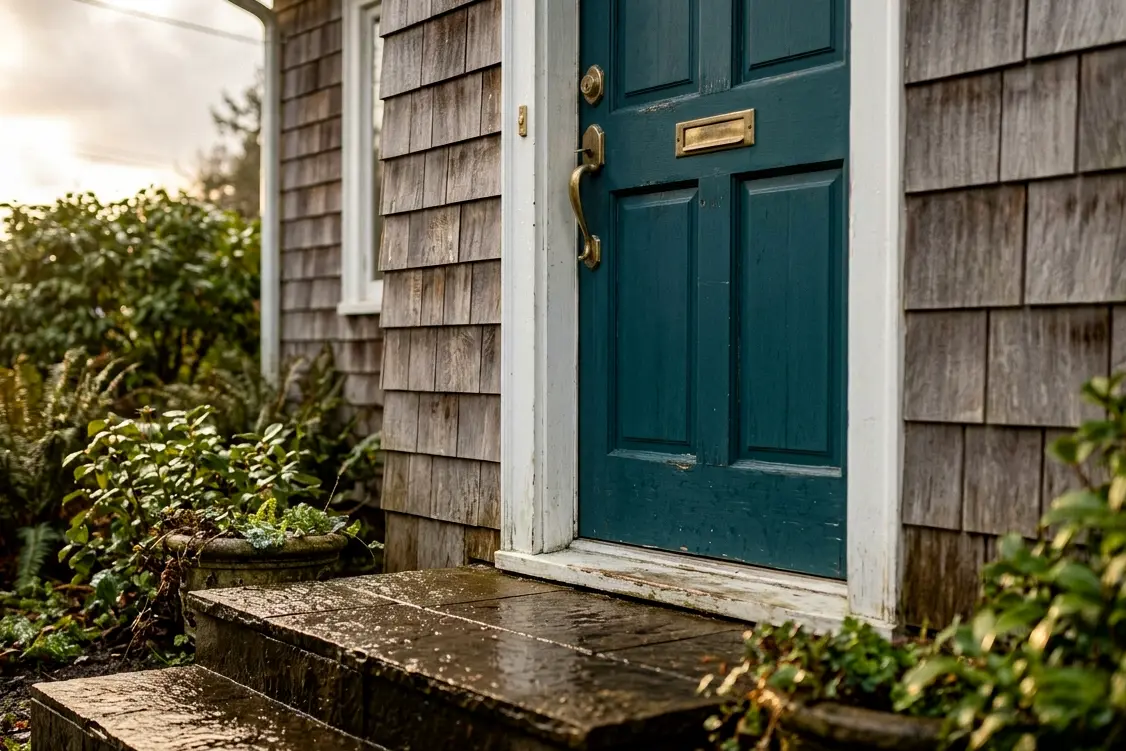
Deep teal front entry door with brass hardware on a gray cedar-shingled house in Browns Point with rain beading on the steps
Quick answer

Door painting covers interior passage doors, closet doors and exterior entry doors. We remove or mask hardware, clean and sand, prime where needed and apply two coats of enamel, sprayed or brushed. In Tacoma, typical pricing runs $148-$286 per interior door, both sides, and $340-$710 for a front entry door with frame. Pricing follows a look at the doors.

Doors get handled more than any other painted surface in a house. Hands push them open near the knob, kids lean on them, and dogs scratch the bottom of the back door. That is why door paint has to be harder and smoother than wall paint, and why a fresh set of doors makes a whole hallway look newer. We paint interior doors in place or take them off to spray flat, depending on the house and the door style.

Front doors are their own project. An entry door faces Tacoma's rain and wind for eight months, then afternoon sun in summer, so it needs an exterior enamel and careful prep around the glass and weatherstrip. A bold front door color is one of the cheapest ways to change a house's curb appeal. Pair it with trim painting inside, or exterior painting outside, for a full refresh.
When to call

Signs it is time for door painting

Gray handprints around knobs

Flat or eggshell paint on doors soaks up skin oils and never wipes fully clean.

Front door faded or chalky

South and west facing doors lose color and gloss quickly, and dark colors fade first.

Paint peeling on the bottom edge

Exterior doors often skip paint on the bottom and top edges, so rain wicks in and the finish lifts.

Sticky doors that rub

Thick layers of old paint make doors bind in their frames, especially in humid months.

Hollow-core doors in builder white

Plain doors look much better in a richer color or a crisp enamel with a real sheen.

Scratches from pets

Claw marks on lower panels need filling and sanding before new paint, or they show right through.

Spraying doors off the hinges versus painting them in place

Panel doors with deep profiles, like six-panel colonials and Craftsman five-panels, take time to brush well. Paint pools in the inside corners and shows lap marks if it is not laid off in the right order. When we have a run of interior doors, we often take them off the hinges, lay them on stands in a garage or a clear room, and spray both sides. The finish comes out smooth and even, and the edges get coated too.

Brushing in place makes sense for one or two doors, for heavy solid doors and for front doors we do not want to leave off overnight. We follow the traditional order: panels first, then the rails across, then the stiles up and down, so every brush stroke runs with the grain of the wood. Hollow-core flat slabs roll and lay off well with a fine foam roller and brush. Either way, two coats go on.

What paint lasts on a Tacoma front door?

An exterior door has to handle months of driving rain, cold mornings and then sharp summer sun on west-facing entries. We use a high-quality exterior enamel, often a urethane-modified or waterborne alkyd, in satin or semi-gloss. Before color, any bare wood or fiberglass gets the right primer, and steel doors with rust spots are sanded and spot primed with a rust-inhibiting primer so the rust does not creep under the new paint.

The edges matter most. Many doors were never painted on the top and bottom edges, so water soaks into the end grain, the wood swells and paint peels from the bottom up. We seal those edges. We also work around the weatherstripping and glass carefully, and we time front door work on a dry day with the door open as little as possible. Dark colors like navy and deep red look great but fade faster in afternoon sun.

Fixing doors that stick, rub or will not latch

Doors that bind are often just over-painted. Each layer adds thickness on the edges and in the frame stop, and in damp months the wood swells a little more. Before we repaint, we check how each door closes. If it rubs, we sand back the built-up paint on the edges and stops so the new coat does not make it worse. Sometimes the real cause is a loose hinge screw, which we tighten or replace with a longer screw.

After painting, doors need time before they are closed tight. Fresh enamel can stay slightly soft for a day or two and stick to the weatherstrip or stop, peeling off in patches. We prop doors open as they dry and tell you when they can close fully. For exterior doors, we leave them closed but not latched hard on the first night when we can. Small habits like that make the finish last.

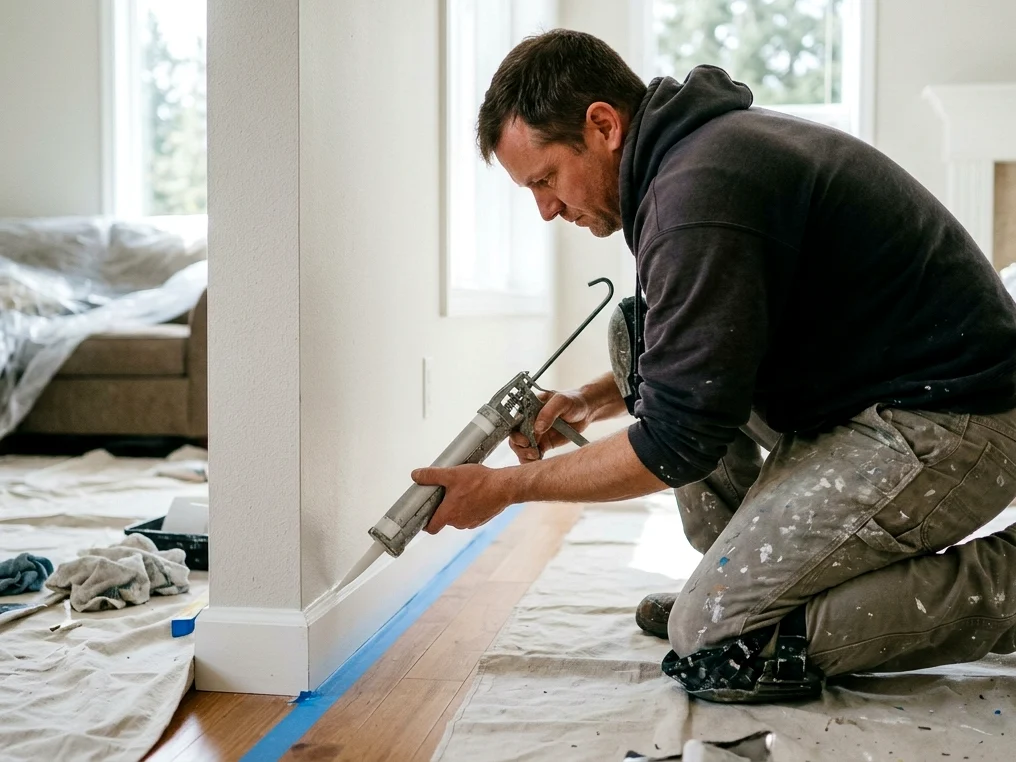
Painter caulking the joint between baseboard and wall before paint in a Puyallup living room
Prep sets the finish: most of a paint day goes into the work before color goes on.
What is included

What our door painting covers

  • Hardware removed or masked and hinges protected
  • Cleaning with a degreaser to remove hand oils
  • Sanding to dull old finish and smooth chips and runs
  • Dents, scratches and pet damage filled and sanded
  • Bonding or stain-blocking primer where the surface needs it
  • Two coats of interior or exterior enamel, sprayed or brushed
  • Top and bottom edges sealed on exterior doors
  • Doors rehung, adjusted and hardware reinstalled
Job days

How a door painting job runs

Typical order of work on a Tacoma-area project. Weather can shift exterior days.

  1. D1

    Count and check

    We count interior and exterior doors, note styles and condition and check how each one closes. You choose colors and sheen.

  2. D2

    Remove or mask hardware

    Knobs, strikes and hinges are removed or masked. Doors being sprayed are taken down and labeled to their openings.

  3. D3

    Clean and sand

    Doors are degreased and sanded to dull the old finish. Edges that rub get extra sanding to remove built-up paint.

  4. D4

    Repair and prime

    Dents, scratches and pet damage are filled and sanded. Bare spots and slick finishes get the right primer.

  5. D5

    Two coats of enamel

    Interior doors are sprayed or brushed in the right order and exterior doors get an exterior enamel. Edges are sealed on entry doors.

  6. D6

    Rehang and adjust

    Doors go back on their hinges, hardware is reinstalled and latches are checked. We let you know when doors can close fully.

Cost

What moves the price of door painting

Typical range $148-$286 per interior door. These are the things that push a job toward either end.

  1. Door style, since raised-panel and Craftsman doors take longer than flat slabs.
  2. Whether the frame and casing on both sides are included.
  3. A big color change, like stained wood to white or a light to dark front door.
  4. Glass panes or sidelites that must be cut in or masked.
  5. Rust, peeling or water damage on exterior doors needing repair first.
  6. The number of doors, since spraying a full set lowers the per-door price.
Local

Door Painting around Tacoma and Pierce County

We paint a lot of interior doors in University Place, Fife and Kent, where 1980s and 1990s homes have hollow-core six-panel doors in builder white that are worn at the knobs. In North Tacoma and the Proctor District, older homes often have solid fir five-panel doors, sometimes still stained, which call for careful prep and a stain-blocking primer if they are being painted. Front doors in Browns Point and Northeast Tacoma take wind-driven rain off the water, so sealing the edges and using a tough exterior enamel makes a real difference there.

Where we do the most door painting

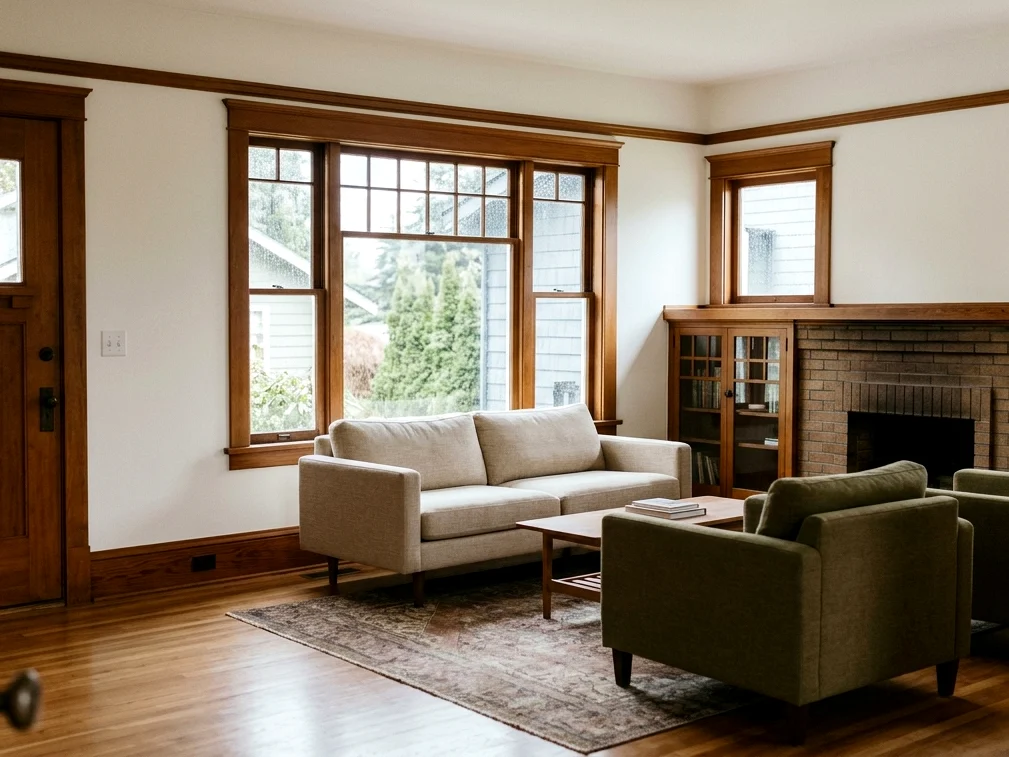
Freshly painted living room in a Tacoma Craftsman with warm white walls, stained fir trim and rain on the window
FAQ

Door Painting questions from Tacoma homeowners

What is the best sheen for interior doors?

Semi-gloss is the most common choice because it wipes clean easily and resists scuffs. Satin is softer and hides small flaws better, and many people prefer it in modern homes. Avoid flat or eggshell on doors, since they hold fingerprints and burnish where hands push. We use a hard-curing enamel in whichever sheen you choose, and the same sheen on every door in the house.

Can you paint a fiberglass or steel front door?

Yes. Fiberglass doors are cleaned, lightly sanded and primed with a bonding primer before exterior enamel goes on. Steel doors get sanded, and any rust is spot primed with a rust-inhibiting primer. Both take paint well when the prep is done properly. We avoid painting steel doors in direct hot sun, which can cause the paint to blister.

How long does a painted front door need before I can close it?

Usually you can close it the same evening, but fresh enamel stays a little soft for a day or two and can stick to weatherstripping if the door is pressed hard. We leave it closed but not slammed the first night when possible. Full hardness takes a couple of weeks.

Do you paint both sides of interior doors?

Yes, by default we paint both faces and all four edges, plus the frame on the side being painted. Painting just one side can work when the other side faces a closet or matches already, and it brings the price down. We list that clearly on the estimate, door by door, so there is no question later.

What front door colors work on Tacoma houses?

Deep colors like navy, forest green, deep teal, oxblood and charcoal suit the gray-green palette of many Tacoma homes and stand out against cedar or gray siding. Brighter yellow or orange can work on a simple modern house. We test a large swatch on the door before committing, since our overcast light shifts colors.

Talk to us about door painting

Call and tell us what you are painting. We answer 24/7 and set up a walk-through at a time that suits you.

Answered 24/7(253) 478-2745