Skip to content
CPCole's Pro PaintingHouse painters, Tacoma and Pierce County Line open 24/7(253) 478-2745
Wood & Stain painting, Tacoma

Cedar siding staining in Tacoma that lets the grain show

Western red cedar is the classic siding of the Northwest, and it shows up on everything from shingled Craftsman gables in North Tacoma to the vertical tongue-and-groove on 1970s contemporaries in Northeast Tacoma and Gig Harbor.

  • 24/7Phone answered
  • $4,380-$9,760Typical, per home
  • 66Areas we paint
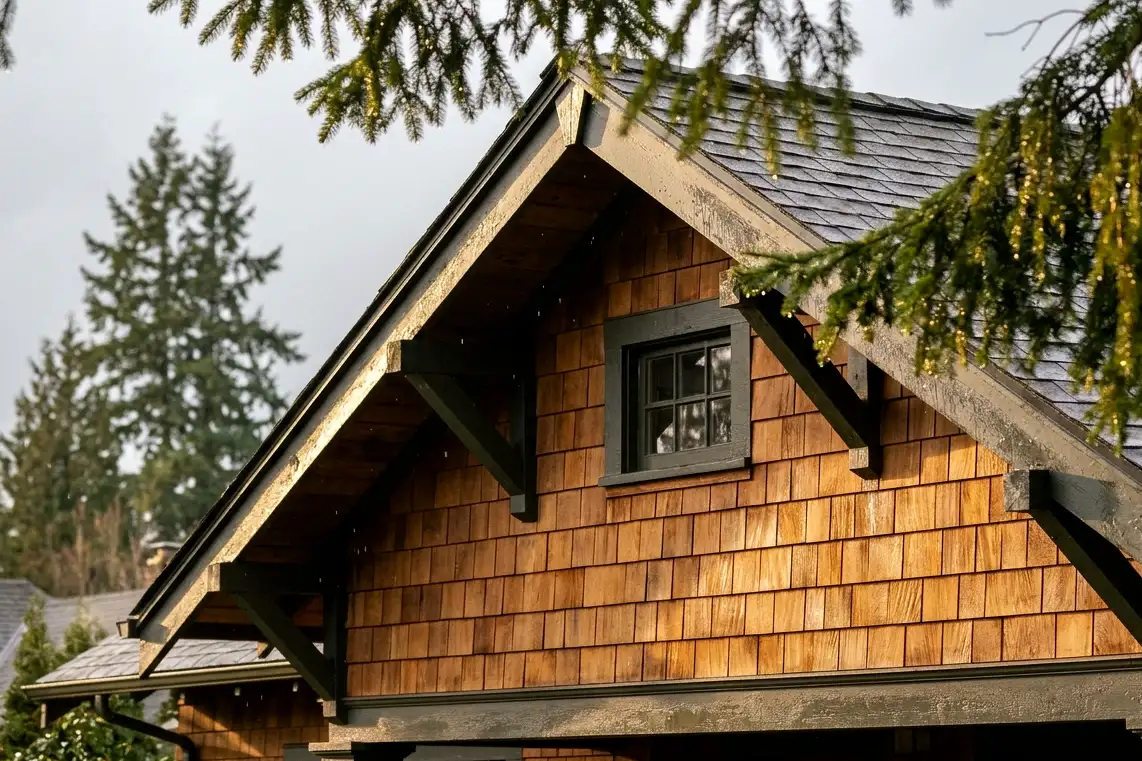
Freshly stained honey brown cedar shingle gable on a North Tacoma Craftsman home, wet fir branches framing the eave on a gray morning
Quick answer

Cedar siding staining in Tacoma involves soft washing off mildew and gray fibers, brightening the wood, letting it dry to about 15% moisture, then applying one or two coats of penetrating semi-transparent or solid stain. A typical two-story home runs $4,380-$9,760 after a walk-through, depending on siding area, stain type, height and the condition of the old finish.

Western red cedar is the classic siding of the Northwest, and it shows up on everything from shingled Craftsman gables in North Tacoma to the vertical tongue-and-groove on 1970s contemporaries in Northeast Tacoma and Gig Harbor. It resists rot naturally, but it does not resist our weather on its own. Left bare, cedar turns silver-gray within a couple of seasons, then darkens and grows mildew on the shady sides.

Staining is how cedar keeps its color and stays healthy. Unlike paint, a penetrating stain soaks into the wood fibers and lets moisture escape, so it wears gradually instead of peeling. Our work is mostly about getting the wood ready: washing, brightening and waiting for dry readings before any stain goes on. If your cedar has already been painted, or you want to move to an opaque color, our siding painting page covers that route. Call (253) 478-2745 to have us look at your siding.
When to call

Signs it is time for cedar siding staining

Silver-gray weathering

Cedar that has gone gray has lost its surface fibers to UV, and stain will not bond well until that layer is cleaned and brightened.

Black spotting on north walls

Dark specks and streaks on shaded sides are mildew growing on the wood, and they spread fast in a wet Tacoma winter.

Water soaks in instead of beading

If a splash of water darkens the siding right away, the old stain has worn out and the wood is taking on moisture.

Blotchy, uneven color

Patchy fading where sun hits hardest means the stain is failing unevenly and the next rain will widen the difference.

Tannin bleed and streaks

Brown or orange stains running down from nail heads or board ends show water is getting into the wood and pulling tannins out.

Cupping or split shingles

Shingles curling at the edges or splitting along the grain have dried and wetted too many times without protection.

Semi-transparent or solid stain for Tacoma cedar?

Semi-transparent stain shows the grain and knots of the cedar while adding color and UV protection. It is the right choice when the siding is in good shape and you like the natural look, which is common on shingled Craftsman homes and newer cedar lap. The tradeoff is time: semi-transparent stain on a sunny south or west wall may need a maintenance coat in a few years, while shaded walls hold up longer. It never peels, so recoating is mostly cleaning and reapplying.

Solid stain covers the grain like a thin paint while still soaking in and breathing. It works well when the cedar is weathered, patched with new boards, or already darkened by older stains that cannot be lightened. Solid stain lasts longer between coats and gives a more uniform color. On older homes in the Proctor District with mixed old and new cedar, solid stain is often the honest choice because it blends repairs that semi-transparent stain would highlight.

Why does cedar need cleaning and brightening before stain?

Weathered cedar has a thin layer of broken-down fibers on the surface, the gray you see from the street. Stain applied over that layer bonds to loose material and wears off quickly. We soft wash the siding with a cleaner made for cedar, using low pressure so we do not fur the grain or gouge soft earlywood. A high-pressure blast can do more damage to cedar than several winters of rain, so we keep the wand at a distance and let the cleaner do the work.

After cleaning, we apply an oxalic acid brightener. It neutralizes the cleaner, removes iron and tannin stains from nail heads, and brings back much of the warm color of the wood. Then comes the hard part in this climate: waiting. Cedar must dry to roughly 15% moisture before staining, and after a wash that can take two or three dry days in summer. We check with a meter on each wall, and the north side often goes last.

How long does a cedar stain last in the Puget Sound climate?

It varies more by exposure than by product. A south or west wall in full sun on a Gig Harbor hillside takes far more UV than a north wall under a big fir in Fircrest. As a rough guide, semi-transparent stains need a refresh sooner, solid stains later, and oil-based penetrating stains tend to fade more evenly than film-forming waterborne products. We look at your specific house and tell you which walls will likely need attention first.

Maintenance is easier than the first job. A gentle wash every spring removes pollen, mildew and spider webs before they settle into the grain. When the sunniest wall starts to look dry and faded, a single maintenance coat on that side keeps the whole house even. Catching it early means no stripping and no sanding, just cleaning and a fresh coat. Combining that with a pressure washing and soft washing visit keeps the cost down.

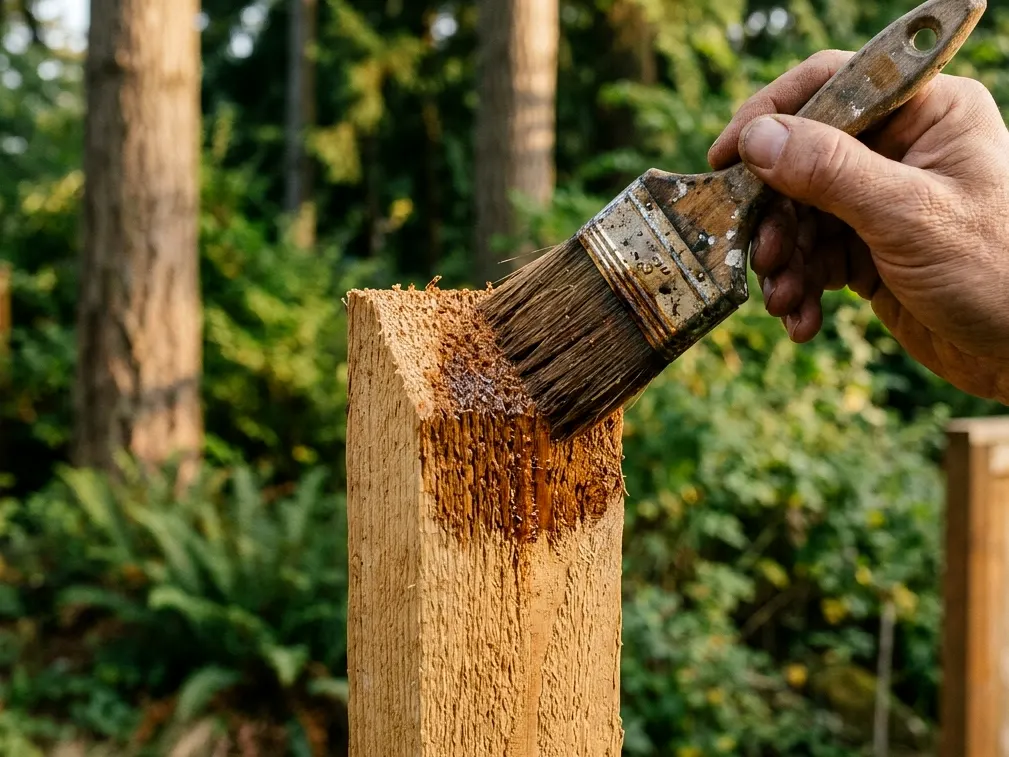
Stain brush working into the end grain of a cedar fence board in a Pierce County backyard
Prep sets the finish: most of a paint day goes into the work before color goes on.
What is included

What our cedar siding staining covers

  • Siding walk-around with moisture readings on every wall
  • Low-pressure soft wash with a cedar-safe cleaner to remove mildew
  • Oxalic acid brightener to restore color and neutralize the cleaner
  • Spot sanding of raised grain, mill glaze and failing old stain
  • Replacement of a few split shingles or cracked boards as needed
  • Masking of windows, roofs, trim and landscaping before stain application
  • Penetrating stain brushed or sprayed and back-brushed into the grain
  • Final walk-around for lap marks, missed edges and full cleanup
Job days

How a cedar siding staining job runs

Typical order of work on a Tacoma-area project. Weather can shift exterior days.

  1. D1

    Assess the siding

    We check moisture, old finish type and damage on each wall. You get a stain recommendation and a range tied to the dry season.

  2. D2

    Protect the property

    Windows, roofing, trim, plants and hardscape are covered. Cleaners and stain overspray stay off everything but the siding.

  3. D3

    Soft wash and brighten

    A cedar-safe cleaner lifts mildew and gray fibers at low pressure. An oxalic brightener follows to restore color and neutralize the wood.

  4. D4

    Dry and prep

    We wait for meter readings near 15% on every wall. Raised grain and failing spots get light sanding while the wood dries.

  5. D5

    Apply the stain

    Stain goes on by brush or sprayer, always back-brushed into the grain. We work in shade where possible to avoid lap marks.

  6. D6

    Inspect and clean up

    We check every wall for misses, drips and uneven tone. Masking and debris come off, and we walk the house with you.

Cost

What moves the price of cedar siding staining

Typical range $4,380-$9,760 per home. These are the things that push a job toward either end.

  1. Total square footage of cedar siding, shingles and gable ends.
  2. Semi-transparent versus solid stain, and one coat versus two.
  3. How much old stain or mill glaze needs sanding or stripping.
  4. Height, steep lots and roof access that need extra ladders or staging.
  5. The number of damaged shingles or boards to replace before staining.
  6. Trim, fascia and window casings painted in a contrasting color.
Local

Cedar Siding Staining around Tacoma and Pierce County

Cedar siding and cedar shingles are everywhere in the Tacoma area. North Tacoma and the Proctor District have shingled Craftsman gables and full cedar shingle homes from the early 1900s. Northeast Tacoma, Browns Point and Gig Harbor have many 1970s and 1980s homes with vertical cedar boards or cedar lap that face long views over the water, which means strong afternoon sun and salt air. Under the tall firs of Fircrest and University Place, the bigger problem is shade and mildew. Since cedar has to dry fully before stain, almost all of our staining runs between late May and mid September, and we book the season early.

Where we do the most cedar siding staining

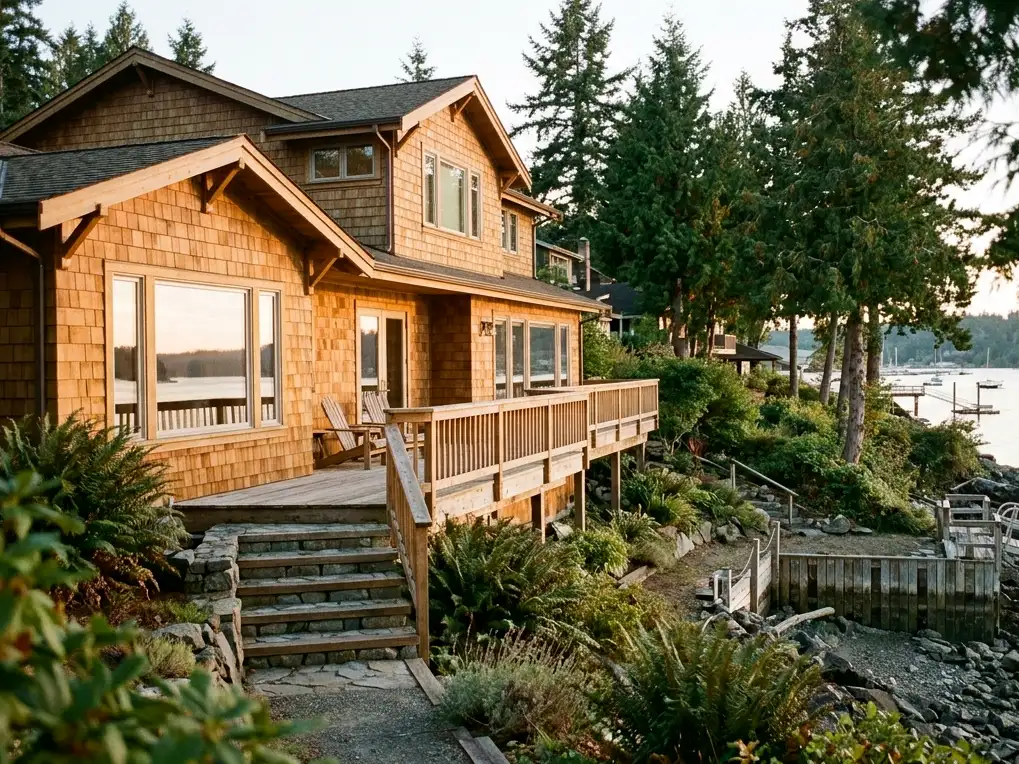
Cedar shingle siding with an even natural-tone stain on a Gig Harbor style waterfront home
FAQ

Cedar Siding Staining questions from Tacoma homeowners

Can you stain cedar siding that was painted before?

A penetrating stain will not soak through paint, so painted cedar needs a different plan. If the paint is failing everywhere, it can be stripped back to bare wood, which is slow and costly. More often we recommend a solid stain or a quality exterior paint over sound, well-prepped paint. During the walk-through we test how the existing coating is holding and lay out the options plainly.

Is oil or water-based stain better for cedar here?

Both can work. Oil-based penetrating stains soak deep, fade evenly, and are easy to recoat without stripping, which suits our wet climate. Waterborne stains dry faster, have less odor, and resist mildew well, but some form a surface film that can wear unevenly. We choose based on what is already on the wood and your maintenance plans, and we never mix systems in a way that causes peeling.

Do new cedar boards need to weather before staining?

New smooth cedar often has mill glaze, a glossy crust from the planer that blocks stain. Instead of waiting months for it to weather, we sand lightly or use a cleaner and brightener to open the surface. Rough-sawn cedar usually takes stain well right away once it is dry. Staining new cedar early also prevents the first round of graying and mildew.

How do you match stain on new cedar shingles to old ones?

Exact matching with semi-transparent stain is hard because new wood is lighter. We sometimes pre-stain replacement shingles with a slightly darker tone, then coat the whole wall so they blend. If there are many repairs, a solid stain is the most even result. We can also schedule a wood rot repair on trim and fascia at the same time so everything is coated together.

Can you stain cedar in the fall or spring?

Only during a real dry stretch. Cedar needs to be dry before staining and the stain needs dry hours to soak in before rain or heavy dew. Late May through mid September gives the best odds. In early fall we watch the forecast closely and may stain the sunny walls first. Morning dew in the shoulder seasons can delay start times, so those jobs often run a little longer.

Talk to us about cedar siding staining

Call and tell us what you are painting. We answer 24/7 and set up a walk-through at a time that suits you.

Answered 24/7(253) 478-2745