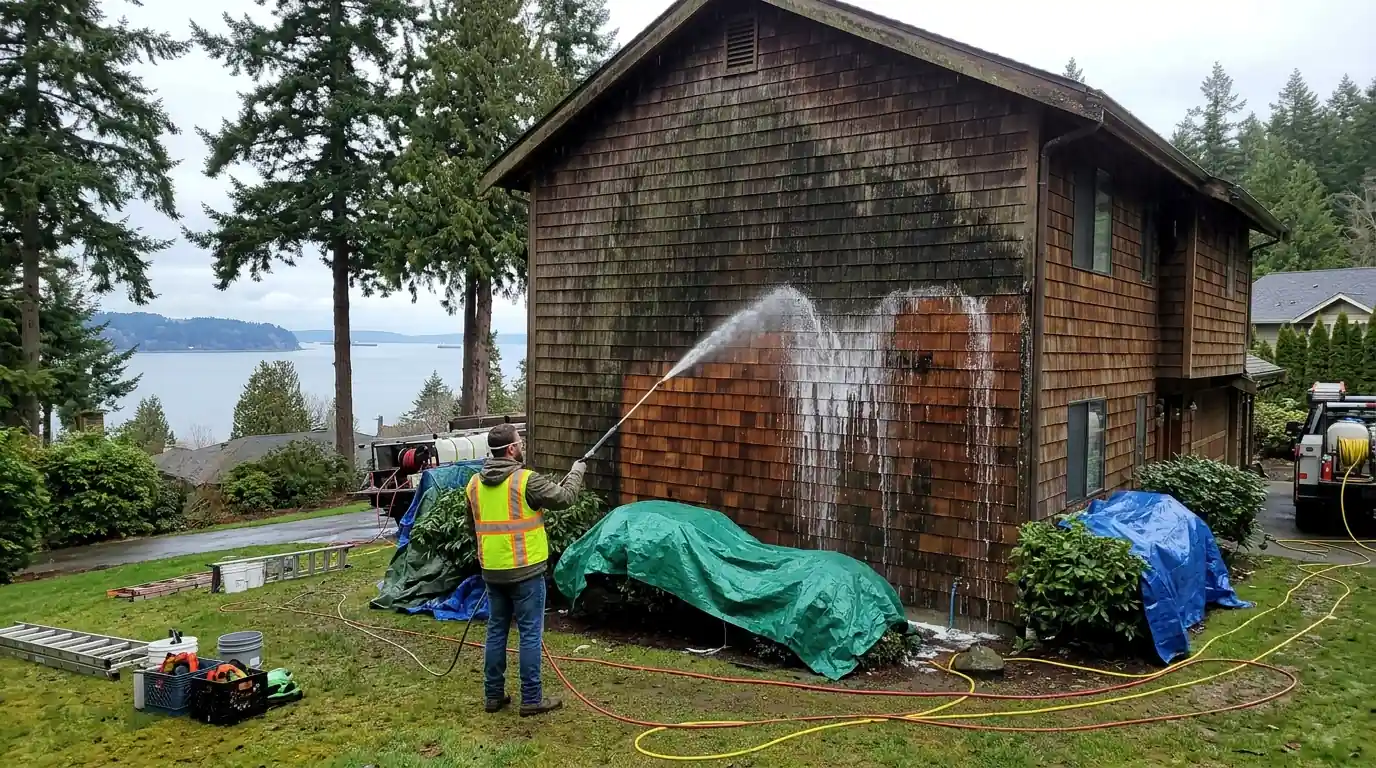
Paint bonds to whatever is on the surface, so dirt, chalk, mildew and moss left on siding become the weak layer that peels later. A careful wash removes them. Around Tacoma, many homes do better with soft washing, which uses low pressure and a cleaning solution, since high pressure can damage cedar and force water behind siding. Then the wood must dry before painting.
Why paint fails on dirty surfaces
Paint does not fix what is underneath it. It grips the outermost layer, and if that layer is dust, pollen, chalky old paint or mildew, the new coat is only as strong as the grime. That is why paint sometimes peels off in sheets that look perfectly clean on the back, because it never gripped the siding at all. Around Tacoma the problem is worse than in drier places, since months of rain feed mildew and moss on every shaded wall, roof edge and fence line.
Washing is the first prep step on every exterior we paint, and it shapes everything after it. A clean surface lets primer soak into bare wood and bond to sound old paint. It also shows the real condition of the house. After washing, peeling areas, cracked caulk and soft wood are easier to see, so scraping and repairs are more accurate. Skipping or rushing this step is one of the most common reasons a fresh exterior starts failing within a couple of seasons. It is the least visible part of the job and one of the most important.
Pressure washing vs soft washing
High pressure has its place, but it is easy to overdo. A strong jet can gouge cedar, raise wood fibers into a fuzzy surface, blow out old caulk, and drive water behind lap siding and into wall cavities. On older windows it can crack glazing. That is why many homes do better with soft washing, which uses much lower pressure plus a cleaning solution to kill mildew, moss and algae at the root. The solution does most of the work, and a gentle rinse carries the residue away without harming the surface.
We choose the method by surface. Concrete walkways, driveways and some masonry can take more pressure. Cedar siding, cedar shingles and painted trim usually get a soft wash. Fiber cement handles moderate pressure, but its butt joints and edges still need care. Vinyl and aluminum siding clean well with low pressure and the right cleaner. Plants near the house are wet down and protected before and after washing. Our pressure washing page explains the options in more detail, including washing as a standalone service between repaints.
- Cedar siding and shingles: soft wash, low pressure
- Fiber cement: moderate pressure, careful at joints
- Vinyl and aluminum: low pressure with a cleaner
- Concrete walks and drives: higher pressure where safe
- Plants: wet down and protected before and after
Dealing with moss, mildew and salt
North walls and shaded corners around Tacoma often carry a green or black film, and roof edges and gutters can hold thick moss that drips onto siding. Mildew has to be killed, not just rinsed, or it grows back through the new coat. A soft wash with a mildew treatment handles most of it. Heavy moss on shingles or decking may need a longer dwell time and a second pass. Gutters should be cleaned at the same time, since overflow is often what keeps those walls wet.
Homes near Commencement Bay, Ruston Way, Dash Point and other shoreline areas face one more issue: salt. Wind carries fine salt onto siding and trim, and that residue can weaken paint adhesion and corrode metal railings and fasteners. A thorough fresh-water rinse before prep removes it. For metal surfaces, we follow washing with rust removal and a suitable primer through our metal railing painting work. Waterfront homes benefit from more frequent washing between repaints, often every year or two, to keep salt from building up again.
Letting the house dry before paint
Washing adds water to the surface, so the house needs time to dry before primer and paint go on. In midsummer, sunny walls may be ready within a day or two. Shaded walls, the lower courses of siding and areas behind downspouts take longer. Earlier in the season, drying can stretch out further. We check the siding with a moisture meter, and wood should read about 15% or less before coating. Painting too soon traps moisture, and trapped moisture is a leading cause of blistering and peeling.
That drying time is built into how we schedule. On many jobs we wash the whole house first, then start scraping and repairs on the sides that dry fastest, so no time is lost. For homes with a lot of mildew, washing a few days ahead of the main crew can help. This is also why exterior work lines up with our drier months, mostly late May to mid September. If you want to check your own siding first, our siding moisture check walks you through a quick look.
Washing between repaints
A repaint is not the only time washing helps. Cleaning the exterior every couple of years removes mildew and dirt before they wear down the paint, which can stretch the time between full repaints. It also keeps the house looking cared for, which matters if you plan to sell. Washing decks and fences on the same visit keeps growth in check there too. For a typical Tacoma-area home, a soft wash of the siding and gutters often runs about $485-$940, a typical range rather than a quote.
When we wash between repaints, we also look for early trouble: caulk gaps, small areas of peeling, and soft wood at sills and fascia. Catching those during a wash means small repairs instead of larger ones later. If the paint is close to the end of its life, we tell you so you can plan the next repaint before winter. To book a wash or a walk-through for painting, call (253) 478-2745. We answer 24/7, and we're happy to talk through what your house needs.
Geneva Bixby, Paint Tips Editor at Cole's Pro Painting. Geneva writes our homeowner guides from what our crews see on Tacoma and Pierce County jobs.