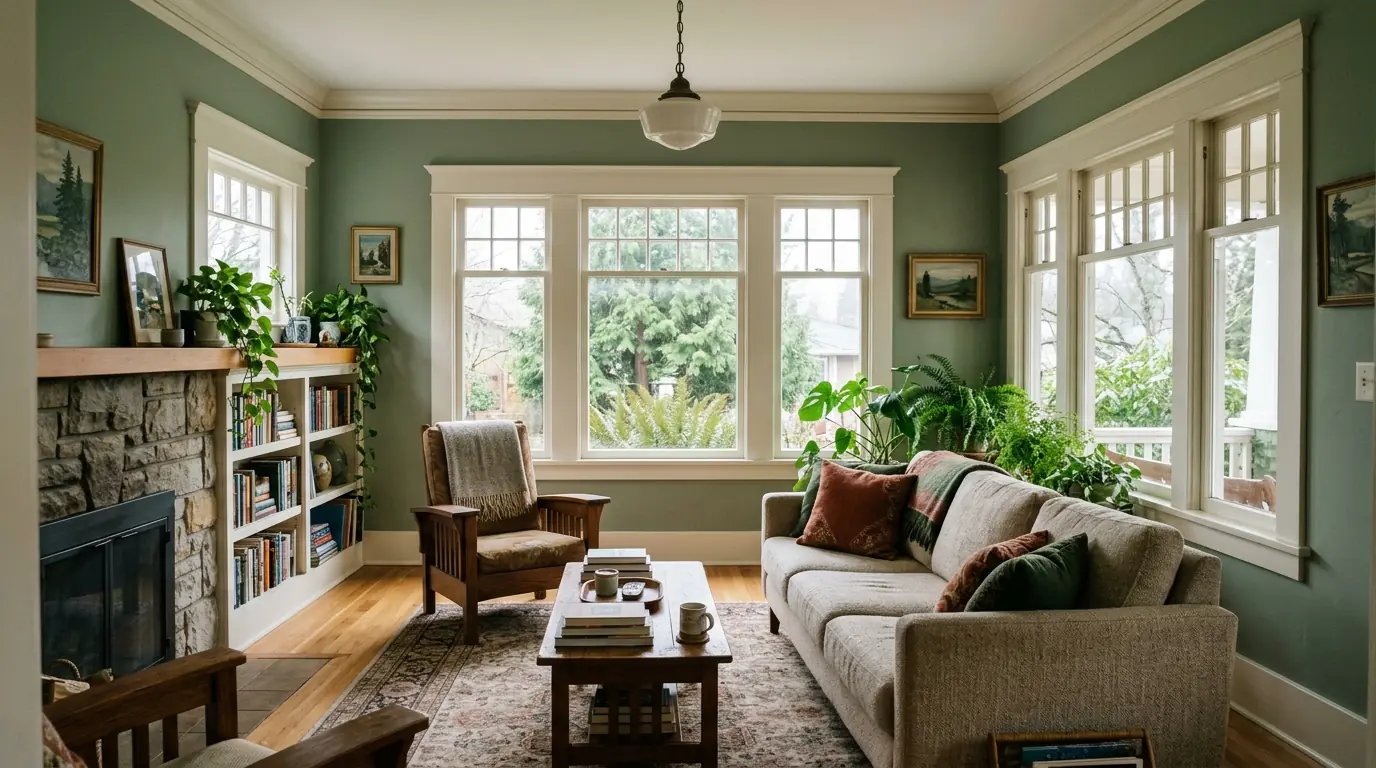
In 2026, Seattle homeowners are moving toward warm whites, soft earthy neutrals, muted greens and deeper accent colors on cabinets, doors and single walls. Cool stark whites and flat grays are fading. Because Seattle light is often gray and diffused, warmer undertones keep rooms from feeling cold. Always test large samples on your own walls, in your own light, before committing to a color.
The big shift: warmer, earthier neutrals
For years, cool gray walls and bright white trim were the default in Seattle remodels. In 2026 most of the color conversations we have start somewhere warmer. Creamy whites, soft beiges with a hint of pink or yellow, mushroom tones and gentle taupes are showing up in living rooms from Ballard to West Seattle. These colors still read as neutral, so they work with most furniture, but they add a little warmth that cool grays never had. They also flatter wood floors and the original fir trim in older homes.
Part of the reason is our light. Seattle sees long stretches of overcast skies, and that light is cool and soft. A cool gray that looked crisp in a showroom can look flat or even blue at home in November. Warm neutrals hold up better through those months. If you already have gray walls you like, you do not have to start over. Shifting to a gray with a warmer, greige undertone, one or two steps away on the color card, can change the feel of a room without a full rethink.
Greens, blues and deep accent colors
Muted greens have become one of the most requested colors we paint. Sage, olive, eucalyptus and soft moss tones fit the Northwest well, picking up the trees outside the window without feeling loud. They work in bedrooms, home offices and dining rooms, and they pair nicely with warm wood and brass. Blues have shifted too, away from bright navy toward dusty and gray-blue shades that feel calmer. For homeowners who want one bold move, deep green, ink blue or brown-red on a single wall makes a strong statement.
That single bold wall is where accent walls come in. A dark color behind a bed, a fireplace or built-in shelving gives a room a focal point without darkening the whole space. In smaller Capitol Hill and Fremont homes, an accent wall can also make a long, narrow room feel better proportioned. The key is choosing the right wall. It is usually the first one you see when entering, or the one behind the main furniture. We can help you pick it during a walk-through so it looks deliberate.
Color drenching and two-tone rooms
One trend that has grown quickly is color drenching: painting walls, trim, doors and sometimes ceilings in the same color or very close shades. Done well, it makes a room feel calm and finished, and it suits Craftsman houses in Wallingford and Green Lake where heavy trim can otherwise feel busy. It works especially well in dens, powder rooms and bedrooms. We usually vary the sheen, with a flatter finish on walls and a more durable satin or semi-gloss on trim, so the color stays consistent while surfaces stay cleanable.
Two-tone rooms go in the other direction. A darker lower section with a lighter upper wall, sometimes split by a chair rail or simply a crisp painted line, adds interest without wallpaper. Painted ceilings are back as well, often a softened version of the wall color instead of plain white. If you prefer pattern, wallpaper installation on one wall or a ceiling pairs well with these painted schemes. The common thread across all of these ideas is intent. Each room should feel planned instead of just covered.
- Color drenching: walls, trim and doors in one shade
- Two-tone walls split by a chair rail or painted line
- Ceilings in a softened version of the wall color
- A deep accent wall behind a bed or fireplace
- Warm whites on trim instead of stark bright white
Choosing sheen and testing colors at home
Sheen matters as much as color. Flat and matte finishes hide wall flaws and look rich, which makes them popular in living rooms and bedrooms, but they mark more easily. Eggshell is a good middle ground for most walls. Satin handles kitchens, bathrooms and kids' rooms better, and semi-gloss is the usual choice for trim and doors because it stands up to scrubbing. In older Seattle homes with plaster walls, a lower sheen also helps hide the gentle waves that plaster develops over many decades.
Testing is where most color regrets are avoided. Small paint chips are not enough, especially under gray Seattle light. We suggest painting large samples, about two feet square, on more than one wall, then looking at them in the morning, in late afternoon and under your lamps at night. A color that glows at noon can turn muddy by evening. If you want help, our color consultation visit looks at your light, floors and furniture and narrows the choices to a few that work together.
Planning a 2026 interior repaint
Interior work can be done any month, which makes it a good winter project while exterior work is on hold. A typical bedroom repaint in the Seattle neighborhoods we serve often lands at $680-$1,340 for walls, and a full main floor can run $3,870-$7,460 depending on ceilings, trim and repairs. Those are typical ranges, not quotes, and we confirm a price after seeing the rooms. Homes built before 1978 may have lead paint in older layers, so any sanding on those surfaces uses lead-safe methods.
Trends are useful as a starting point, but your home should still feel like yours. The best schemes we paint usually mix one or two current ideas with colors the homeowner has loved for years. Think about which rooms connect visually, since open plans look best when the colors relate to each other. When you are ready to talk through ideas or get a price, call (253) 478-2745. We answer 24/7, and we can set a time to walk through the rooms with you and look at your light.
Geneva Bixby, Paint Tips Editor at Cole's Pro Painting. Geneva writes our homeowner guides from what our crews see on Tacoma and Pierce County jobs.